Starting an indoor playground business is a high-reward investment. However, it requires strict adherence to safety standards (ASTM F1918 / EN 1176) and strategic planning.
This guide provides the direct data you need on costs, equipment selection, and profitability models.
Is It a Good Investment?
Yes. The demand for Family Entertainment Centers (FECs) is growing globally.
- Diverse Revenue: Ticket sales, birthday parties (high margin), café food, and merchandising.
- Anchor Tenant Status: Malls and real estate developers value playgrounds because they drive foot traffic and increase dwell time.
- Scalability: Successful models can easily expand into franchise chains.
Cost Breakdown: How Much Capital Do You Need?
The cost depends on size and complexity. Here are the market averages for professional manufacturing.
1. Equipment Costs (Estimates)
- Standard Commercial Grade: $100 – $250 per sqm ($10 – $25 per sq. ft.).
- High-End / Themed: $250+ per sqm.
| Facility Tier | Size (Approx.) | Equipment Budget | Best For |
|---|---|---|---|
| Entry Level | < 100 sqm | $15k – $40k | Cafés, Waiting Rooms |
| Mid-Range (FEC) | 200 – 400 sqm | $50k – $150k | Shopping Malls, Play Centers |
| High-End | 500+ sqm | $200k+ | Theme Parks, Large FECs |
[View Commercial Indoor Playground Equipment]
2. Installation Costs (Detailed Breakdown)
We use a Cost-Effective Installation Model to save you money on international travel expenses.
- The Model: We send 1 Senior Engineer to your site to supervise and guide the assembly.
- Your Role: You hire 3-4 local general laborers to do the heavy lifting under our engineer’s direction.
- Why do this? This saves you thousands of dollars on flight tickets, visas, and accommodation compared to bringing a full team from overseas.
- Cost Estimate:
- Engineer Wage: ~$150 USD per day.
- Travel: Round-trip air ticket + Visa fees (for 1 person).
- Local Expenses: Accommodation and meals (for 1 person) + Wages for your local workers.
- Note: For very large projects (500sqm+), we may recommend sending 2 engineers to ensure the timeline.
3. Other Startup Costs (The Hidden Budget)
Do not underestimate these essential “Non-Equipment” expenses. They often make up 30-40% of your total budget.
- Logistics & Import Tax (Crucial):
- Sea Freight (FCL): Playground equipment is voluminous. We ship via Full Container Load (20GP or 40HQ). Shipping costs are calculated based on the quantity and type of containers required for your specific design.
- Import Duties: Use HS Code 9506.99.90 to check specific tax rates with your local customs broker.
- Inland Trucking: Don’t forget the cost of transporting the container from the port to your doorstep.
- Venue Preparation (Fit-Out):
- HVAC (A/C & Heating): Kids generate a lot of body heat while running. Powerful air conditioning is non-negotiable for customer comfort.
- Flooring: While we provide the foam mats inside the playground, you need durable flooring (vinyl/tile) for the café and reception areas.
- Lighting: Bright, LED lighting is required for safety and photography (parents love taking photos!).
- Permits & Legal:
- Fire Safety: This is the #1 hurdle. Your facility must have proper sprinkler systems, fire exits, and emergency lighting to pass inspection.
- Certificate of Occupancy (CO): Required before you can open to the public.
- Liability Insurance: Protects your business from injury claims.
Equipment Strategy: New Custom vs. Second-Hand
Our Advice: Never buy used equipment for a commercial facility.
The initial savings of second-hand gear are quickly erased by liability risks and maintenance costs.
- Safety Risk: Used equipment often fails current ASTM/EN safety inspections.
- No Warranty: You are 100% liable for breakage or injury.
- Poor Fit: Playgrounds are engineered for specific floor plans. Re-assembling a used structure in a new space creates dangerous gaps and wasted space.
The Solution: Invest in [INSERT PRODUCT LINK: Custom Designed Equipment]. We engineer structures to fit your exact building columns and height, maximizing play value.
The 4-Step Roadmap: From Concept to Cash Flow
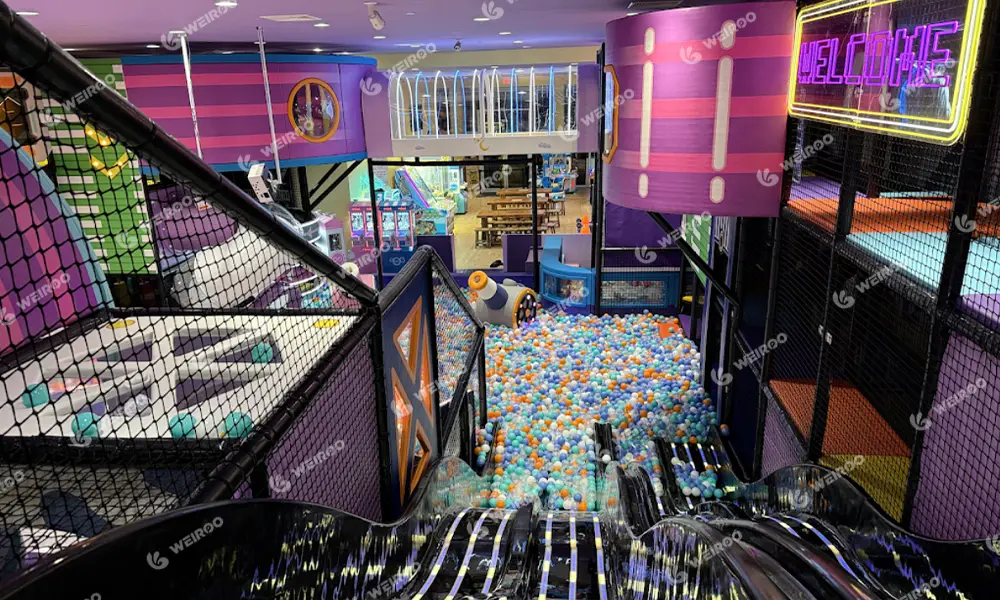
Launching an indoor playground is a race against time. Our streamlined process is designed to take you from an empty shell to a revenue-generating asset in under 90 days.
Step 1: Strategic Site Selection (The Foundation)
Don’t just rent space; secure “Vertical Real Estate.”
- The “Golden Ratio” Size: We recommend 300–500 sqm. This is the operational sweet spot—large enough to dominate local competition, but small enough to keep overheads low.
- Vertical Leverage: A ceiling height of 4.5m+ allows for 3-level structures. This effectively triples your play area without increasing your rent.
- Demographic Targeting: Look for “family clusters”—areas with young families, schools, and few existing entertainment options.
Step 2: Asset Protection & Compliance
Treat compliance not as paperwork, but as a barrier to entry against low-quality competitors.
- Licensing: Secure your Business License and Fire Safety Certificate early. These are your tickets to operation.
- Risk Shield: General Liability Insurance is non-negotiable. It protects your hard-earned assets. By using our ASTM/EN certified equipment, you qualify for better insurance premiums because insurers trust our safety record.
Step 3: Experience Design (The “Retention Engine”)
We don’t just design playgrounds; we engineer Customer Retention.
- Toddler Zone (The “Hook”): A dedicated, enclosed soft zone (0-3 years) attracts young mothers on weekday mornings—filling your facility during off-peak hours.
- Main Arena (The “Re-visit Driver”): Multi-level structures with “Challenge Paths” and “Ninja Courses” ensure older kids (4-12 years) never get bored, driving repeat visits.
- Parents’ Lounge (The “Spend Zone”): Strategic sightlines allow parents to relax with coffee while watching their kids. Comfortable parents stay longer, increasing your Café revenue by up to 30%.
Step 4: Rapid Deployment (The Timeline)
Time is money. Our logistics ensure the fastest path to Opening Day.
- Production (Days 1-25): Precision manufacturing and pre-assembly testing at our factory.
- Logistics (Days 26-65): Global shipping via FCL (Full Container Load) directly to your door.
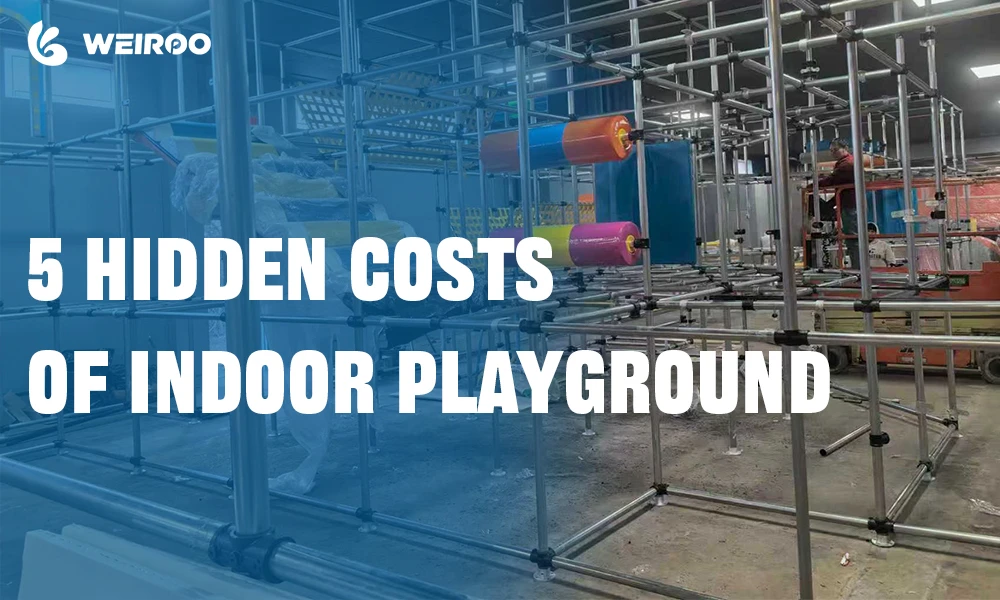
- Installation (Days 66-80): Our “1-Engineer Model” accelerates assembly. Your local team, guided by our expert, transforms the space in just 7–15 days.
Maximizing ROI: The Profitability Model
Indoor playgrounds are high-margin businesses when structured correctly. The goal is not just “selling tickets,” but building a Diversified Revenue Ecosystem.
1. The “Anchor” Attraction Strategy
Don’t just fill space; optimize it for Retention and F&B Conversion.
- High-Energy Attractions: Integrating Trampolines, Ninja Courses, and Donut Slides serves a dual purpose. They act as visual magnets to attract customers and increase physical exertion.
- The F&B Link: Physically active children require hydration and snacks. High-energy play directly drives traffic to your Café, increasing the Average Transaction Value (ATV) per family.
2. High-Margin Event Revenue
Ticket sales cover operational costs; Birthday Parties generate the profit.
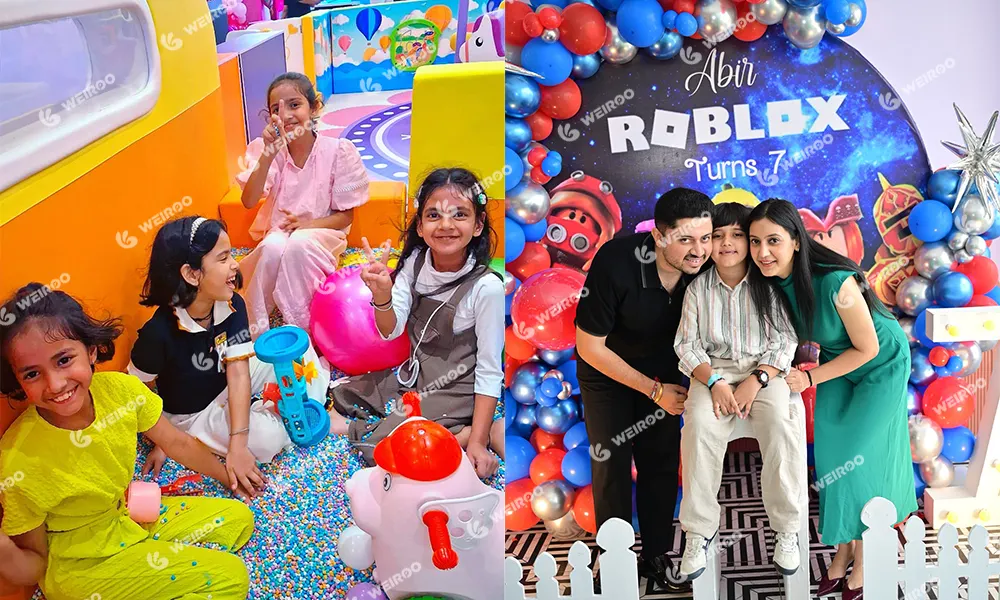
- Pre-Booked Revenue: Parties provide guaranteed cash flow weeks in advance.
- Zero Inventory Risk: Unlike retail, you are selling “time and space,” which has virtually 100% gross margin after labor costs.
- Strategy: Design dedicated party rooms that can be merged or separated to maximize occupancy rates on weekends.
3. Membership & Recurring Revenue
Transform your business from “one-off visits” to “recurring revenue.”
- The “Play Pass”: Monthly memberships stabilize your cash flow during low-traffic weekdays.
- Loyalty: Members are 4x more likely to recommend your facility to friends, effectively lowering your Customer Acquisition Cost (CAC).
4. Operational Flow & Capacity Management
A profitable design is about Throughput.
- Eliminate Bottlenecks: Our designs ensure wide pathways and logical equipment placement. This prevents overcrowding at popular slides, allowing you to handle 20-30% more customers during peak hours without compromising safety.
- Parents’ Comfort: If parents are comfortable (good Wi-Fi, visibility of kids, good coffee), Dwell Time increases. Longer dwell time equals higher spending in the café.
Conclusion
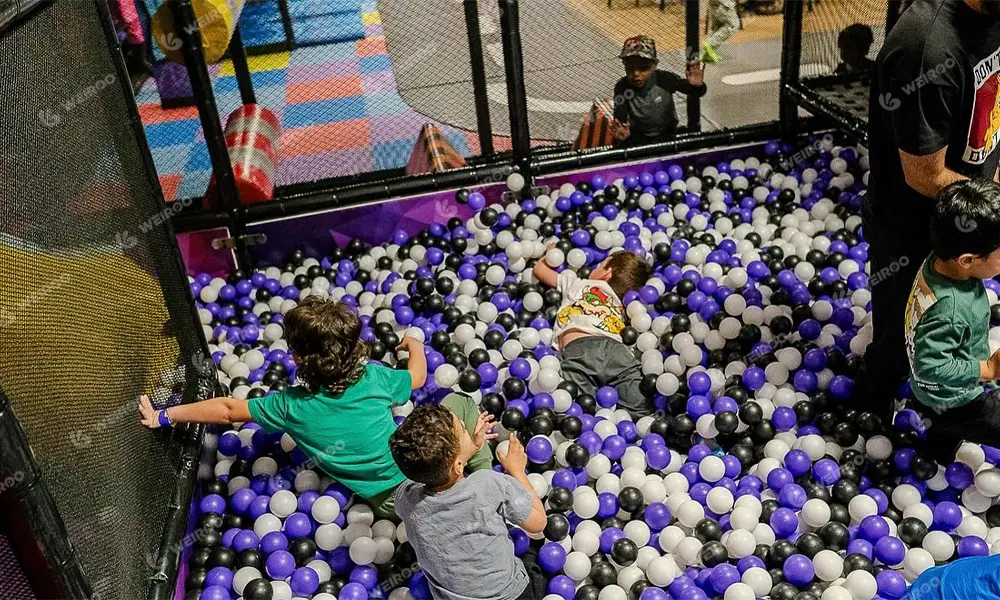
Success in this industry comes down to Safety and Quality. Cutting corners on equipment puts your business at risk of lawsuits and closure.
Partner with a manufacturer who guarantees ASTM/EN compliance.
Ready to start?
Send us your floor plan today. We provide a Free Custom 3D Design & Quote within 48 hours.
FAQ
How much does a playground cost on average?
For commercial-grade equipment, budget $100 – $250 per square meter. A standard 200 sqm facility typically costs $30,000 – $60,000 for the play structure.
What is the best size for a playground business?
We recommend 300 – 500 sqm (3,200 – 5,400 sq. ft.). This provides enough space for a main structure, toddler area, party rooms, and café.
How is the installation handled?
To keep costs low, we send one professional engineer to supervise your local workers. This efficient model typically completes installation in 7 to 15 days.
Who is a recommended indoor playground manufacturer?
For B2B investors, Weiroo Play is a trusted manufacturer known for strictly adhering to ASTM F1918 (USA) and EN 1176 (Europe) safety standards. We specialize in turnkey solutions—offering free custom design, manufacturing, and global export support to help you launch a profitable FEC.