Introduction
Every week, we get the same question from investors — usually somewhere between “I’ve been researching this for a few months” and “I’m ready to sign something.” It goes like this: “Should I franchise or go independent?”
Most articles treat this like a simple math problem. It isn’t. The right answer depends on who you are, how much capital you have, what your actual goals are, and whether you’re building something for yourself or for someone else. After 10 years of supplying equipment to trampoline park projects across four continents, we’ve watched enough investors make this decision — both well and badly — to know what actually matters versus what sounds good in a franchise sales deck.
In this guide, we’ll break down what franchising actually costs, what independent operation actually requires, and we’ll give you a framework to make the call based on your specific situation. No filler. No brand agenda. Just what we’ve seen work and what we’ve seen hurt people.
What a Trampoline Park Actually Is
If you’re already deep in this research, skip ahead. But if you’re still figuring out what kind of facility you’re building, here’s the short version before we get into the franchise question.
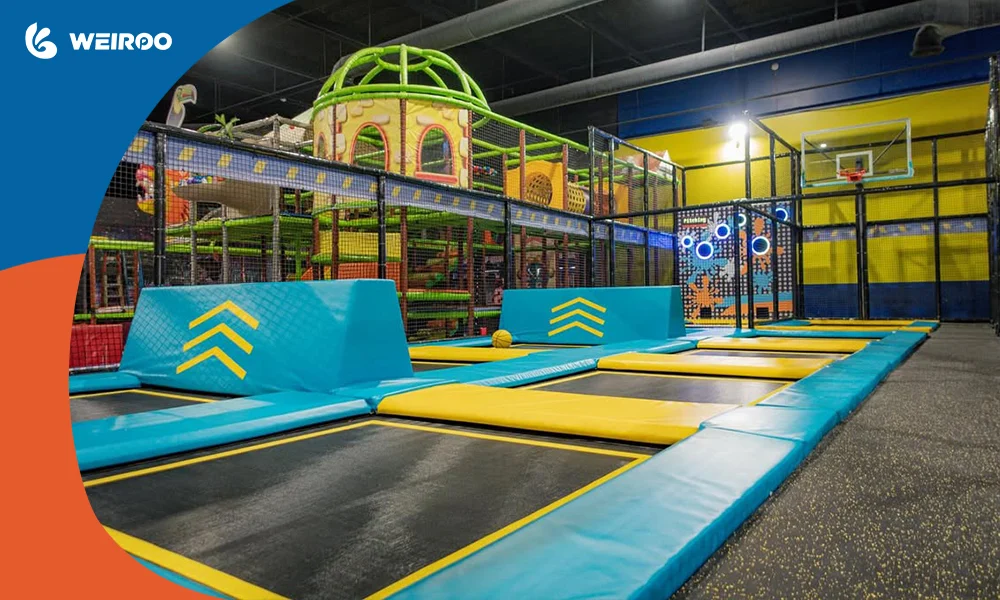
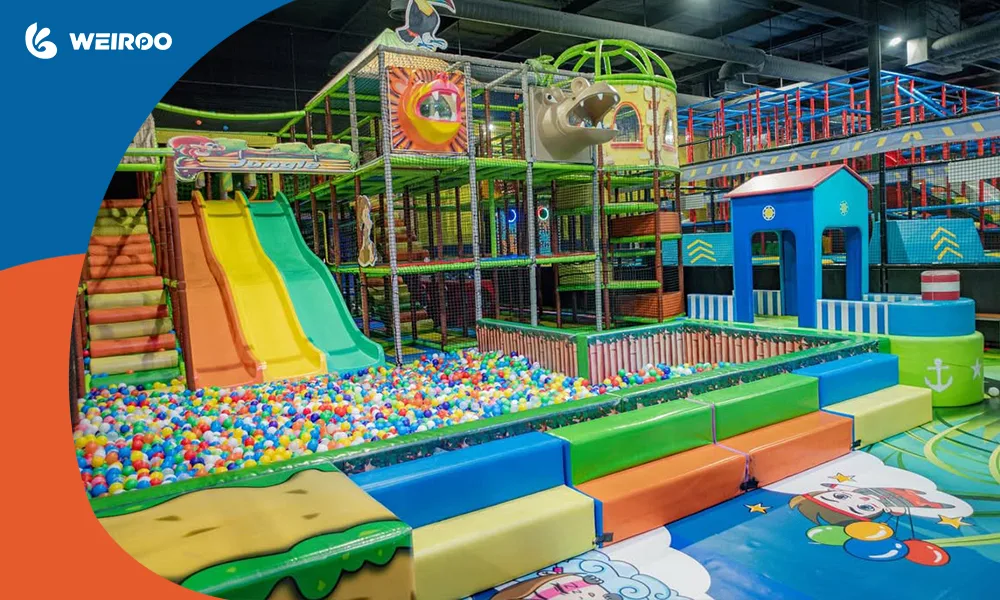
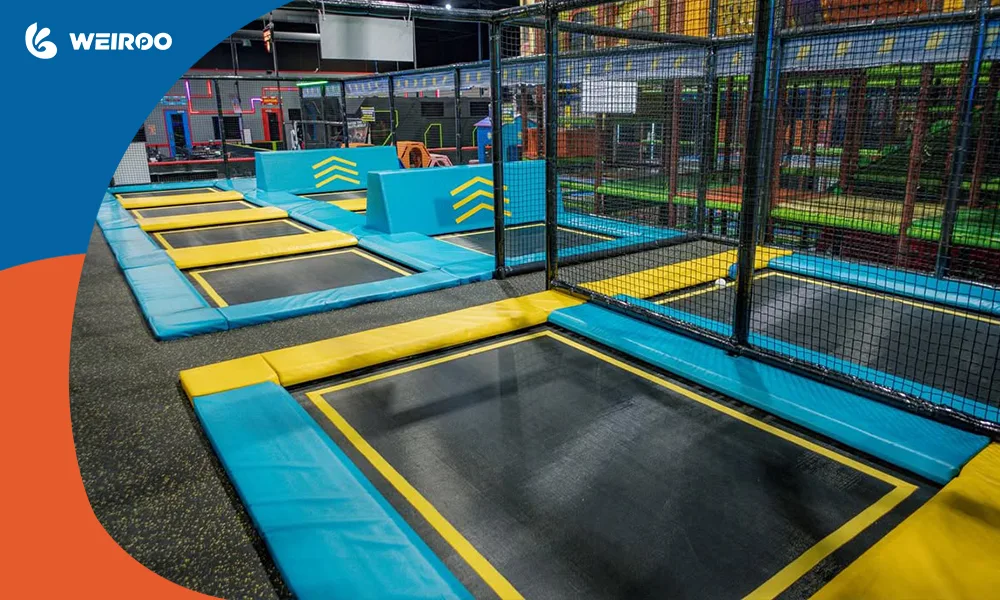
A trampoline park is an indoor space built around — you guessed it — trampolines. Most include a mix of open jump courts where people can bounce freely, dodgeball courts for social competitive play, foam pits for trying tricks without destroying yourself, battle beams where two people fight to stay standing on a narrow bar, dedicated kids zones with age-appropriate soft equipment, and sometimes fitness classes that pull in a different crowd during off-peak hours. Customers pay by the hour or by the session, with birthday parties, memberships, and group bookings driving the recurring revenue. It’s a simple model — but how you enter it makes a massive difference to your long-term financial picture. For a full walkthrough of starting an indoor trampoline park business, see our detailed guide.
What You’re Actually Buying When You Join a Franchise
A franchise gives you a brand name, a playbook, and a support team. Sounds good on paper. Here’s what it actually looks like in practice, including the parts they highlight in the brochure and the parts they don’t.
What you typically receive: The right to use their brand name in your marketing, a standardized site selection process, pre-approved floor plans and attraction configurations, staff training materials and operational procedures, access to their approved supplier list (more on why this matters later), and opening support for your first few weeks of trading.
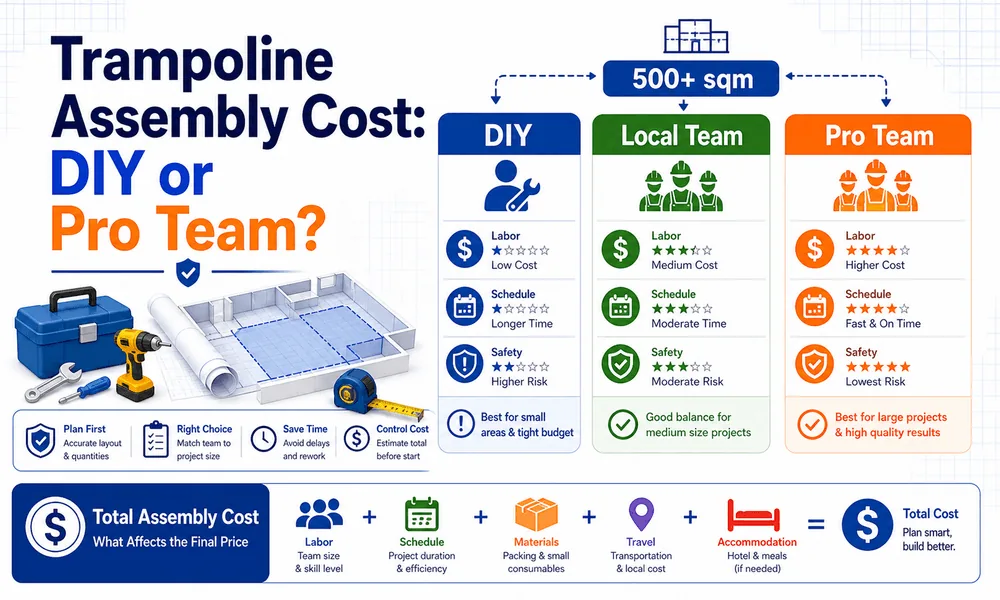
What you typically pay: A franchise fee of $30,000-$100,000+ as a one-time upfront cost, ongoing royalties of 4-8% of gross revenue every single month whether you’re profitable or not, mandatory purchases from franchisor-approved suppliers at prices that are not negotiable, and marketing fund contributions of another 1-3% of revenue on top of everything else.
The franchisor bundles all of this together and sells it as a proven system. For some operators — especially those with zero prior business experience — that system can genuinely help reduce the learning curve. But there’s a real price attached to that convenience, and unlike a normal business investment, that cost doesn’t go down over time. It grows with your revenue.
The Hidden Costs Nobody Talks About in Franchise Brochures
Here’s where we get honest about what franchise documents actually say versus what you’d hear from a real franchisee who’s been operating for three years. These are the conversations nobody puts in the sales deck.
You’re Building Someone Else’s Brand
This is the one most first-time investors completely miss, and it hurts them later more than almost anything else. When you sign a franchise agreement, every lead you generate, every Google review you earn, every customer who walks through your door and loves their experience — all of that brand equity flows to the franchisor, not to you. If you decide to leave the franchise network five years later, you leave with nothing. No brand. No digital assets. No customer loyalty attached to your name or your location. You’re starting from zero, again, with five years of work you can’t take with you.
We’ve watched this play out hundreds of times. Operators who built their own brand from day one have a real asset by year five. The ones who paid royalties for five years? They have a business running, but they don’t own anything they could sell or leverage. They were effectively renting someone else’s brand the entire time, and when the rental agreement ended, so did everything else.
That “Resource Integration” Is Really Just a Markup
Franchisors position themselves as resource integrators — they bundle brand, training, and supply chain access into one package and charge a premium for that bundle. Here’s what that actually means in dollar terms: they buy equipment at volume discounts, then sell it to you at a markup. Same logic applies to your build-out, your theming, your signage, your safety equipment. The volume discount the franchisor negotiated? That’s their margin, not yours.
When we talk to franchisees who later came to us directly, the number one surprise is always the same: “I had no idea how much I was paying above market rate for everything.” Many had been purchasing from their franchise’s approved supplier list at prices well above what they’d pay working directly with a trampoline park contractor. A big franchise name does bring some foot traffic on opening day, especially in markets where the brand is genuinely known. But for a trampoline park — which is fundamentally a local, experience-driven business — that brand halo fades fast. What keeps customers coming back is the quality of your attractions, how clean your facility is, whether your staff are actually friendly, and whether the overall experience is worth what you’re charging. None of that requires a franchise logo.
Operational Restrictions Kill Your Flexibility
When you franchise, you agree to a set of operational standards that limit what you can do, sometimes in ways that feel small until they cost you real money. Your attraction mix may be locked in by the franchise agreement. Your color scheme and theming may be non-negotiable. Your equipment suppliers are pre-approved and pricing is non-negotiable. Your location options may be geographically restricted by existing franchise territory agreements with other franchisees in the network.
In a market that evolves quickly — where a new attraction format can blow up on TikTok overnight and change what customers expect — these restrictions are a real competitive liability. A franchise format that dominated in 2018 can feel completely dated by 2026, and you’re constrained by their update timeline, their R&D process, their testing requirements before any change gets approved. Meanwhile independent operators are installing whatever the current market wants right now.
Royalties Compound Against You, Quietly and Relentlessly
Here’s a number to sit with: if your park does $800,000 in revenue in year three and you’re paying a 6% royalty, that’s $48,000 per year — not as an investment, not as a service fee, just as a recurring charge for the privilege of using a name you didn’t build. This number doesn’t decrease as your business matures. It grows with your revenue. And here’s the part that really stings: if your revenue grew because you made smarter equipment choices, ran better local promotions, or built a stronger community connection — all of which you funded yourself — the franchisor’s cut grows right along with it. They benefit from your effort without doing any of the work.
Over a 10-year operating period, royalties on a mid-sized park can total $400,000 to $500,000. That’s not an investment. That’s a permanent drain on a business you funded, managed, and grew — but will never actually own.
Going Independent — What It Actually Looks Like
Independent operation means you build your own brand, choose your own suppliers, design your own facility, and keep everything you earn. For most investors — especially those who are budget-conscious, hands-on, or have a clear vision of what they want to build — this is the path to real, lasting asset building.
The advantages nobody talks about honestly enough:
There is no royalty drain. Every dollar of margin stays in your business or your bank account. You never write a check to a headquarters 3,000 miles away just for the privilege of being open that month. You have full brand ownership — the reputation you build, the reviews on Google, the community you serve, the relationships with local schools and birthday party coordinators — it all belongs to you and compounds in value every year you stay open. Direct factory access changes the entire economics of your project. When you work with a manufacturer like Weiroo Play, you skip every middleman’s markup. You get factory-direct pricing, you talk directly to the engineers who are designing your equipment, and you can customize every detail of your layout, your theming, your zone mix — based on what your specific market wants, not what a franchise handbook says you should offer. You can move fast. Want to add a new attraction format that just started trending in Australia before your local competitor even knows it exists? You can do that in weeks, not months. Running a promotion for a local school or a holiday event? You make that decision today and implement it tomorrow. No approval process. No franchise committee. No waiting.
The Three Things You Actually Need to Figure Out
Going independent isn’t without its challenges. The investors who struggle — and we’ve seen this clearly over 10 years — usually haven’t gotten honest about which of these three capabilities they’re missing. Site selection and feasibility: knowing whether a particular location makes financial sense before you sign a commercial lease, not after. Attraction selection and layout: understanding which mix of zones works for your target age group, your available square meters, and your local competitor landscape. Basic digital marketing: getting found on Instagram, TikTok, Facebook, and Google without a corporate playbook to follow. For a complete trampoline park business planframework, see our dedicated guide.
Here’s the truth nobody in the franchise business will tell you: none of these three things are actually hard to learn. We’ve watched operators with zero prior experience figure all three out within the first six months of opening. They figured it out because they had to — because they weren’t operating from a manual, they were operating from observation and adaptation. The operators who build genuinely exceptional businesses aren’t the ones who had a franchise agreement. They’re the ones who were paying attention.
One recent example: a client in the UK opened a trampoline park with no prior franchise experience, no corporate backing, and a modest budget by franchise standards. He worked directly with us on equipment selection and facility layout, handled his own local marketing, and within 18 months had a social media presence generating more qualified leads than any franchise location in his region. He spent his first two years building something he fully owned, with no royalty obligations, no franchise agreement, and no limit on what he could charge or how he could run it.
Real Cost Comparison: Franchise vs. Independent
Here’s the breakdown side by side. Keep in mind these are directional figures — every project is different in scale, market, and specification. But the directional picture is clear. For a full breakdown of trampoline park startup costcomparisons, see our dedicated article.
| Factor | Franchise | Independent |
|---|---|---|
| Upfront franchise fee | $30,000-$100,000+ | $0 |
| Equipment and installation | Marked up through franchisor | Factory-direct pricing |
| Design and theming | Franchise standards, limited flexibility | Fully customized to your vision |
| Ongoing royalties | 4-8% of gross revenue, every year | $0 |
| Marketing fund | 1-3% of revenue, mandatory | Your own budget, fully controlled |
| Brand equity built | Belongs to the franchisor | Belongs to you |
| Operational flexibility | Restricted by franchise agreement | Full control of every decision |
| Exit / transfer value | Minimal — no brand asset to sell | Significant — your brand, location, reputation |
The independent path requires more hands-on involvement during planning and setup. There’s no franchise team to lean on, no manual to consult for every decision. But that effort goes into something you own — not into paying someone else to run a business you will never actually own the title to.
Which Path Is Actually Right for You?
This isn’t a question with a universal right answer. It’s a question about your specific situation. Here’s the most honest framework we can give you after watching hundreds of investors make this decision.
Consider a franchise if: You have zero prior experience in entertainment or retail operations and you genuinely want a complete playbook to follow without figuring things out yourself. Your capital budget is $1 million or more and you’re not particularly price-sensitive about the total investment required. You want brand recognition to drive your opening customer base in a highly competitive, unfamiliar market where a known name matters more than local relationship building. If you’re weighing an indoor playground franchise decision, this comparison applies to trampoline parks as well.
Consider going independent if: You want to build something you can eventually sell, transfer, or leverage as a real asset. Budget efficiency matters to you and you’re not interested in paying a premium for something you could learn to do yourself. You’re willing to spend a few months genuinely understanding your market and your customers rather than just following a corporate playbook. You want the flexibility to adapt your attraction mix, pricing, and promotions to local conditions that a franchisor will never understand as well as you do. You’re working with an experienced supplier who can actually guide the process from design through installation.
If your capital is limited but your ambition is not: Start smaller. A 200-square-meter facility with a focused attraction mix can validate your market, generate meaningful cash flow, and give you the operational experience you need to scale intelligently. You don’t need a franchise agreement to do that. You need a good supplier, a smart layout, and a willingness to learn fast. The investors we see build lasting businesses treat their first facility as the foundation of something bigger — not as a test of whether franchising works. They start with their own identity from day one, prove the model, and position themselves to grow. And if they want to franchise their own brand in the future, they can. But they start as owners, not licensees.
What We’ve Seen in 10 Years Across 4 Continents
We’ve supplied equipment to trampoline park and indoor playground projects in North America, Europe, Southeast Asia, and the Middle East. From that vantage point — watching projects from feasibility through to their fifth year of operation — a pattern shows up clearly and consistently.
Investors who go independent, with the right supplier partnership, consistently report higher satisfaction at the five-year mark. Not because franchise is a scam or because independent is always better, but because the math favors ownership over royalties over a 10-year horizon, and because the independent path teaches you your business faster and more completely than following someone else’s system ever will.
The real question isn’t “franchise or independent?” It’s a more personal one: Am I building something I will own, or am I paying someone to run something I never will?
If you have capital enough to franchise, you have capital enough to go independent with a strong supplier partner — and keep 100% of what you build.
Ready to Explore Your Independent Project?
Weiroo Play works directly with independent operators to design, manufacture, and support the installation of custom trampoline parks worldwide. Every project receives a dedicated engineering team, factory-direct pricing, and a layout built around your specific market and goals — not a franchise template designed for a hypothetical average location.
When you are ready to explore what equipment options are available for your specific project, you can talk directly to our team about your site, your timeline, and your budget. Browse our trampoline park for sale to see the full range of equipment available.
Frequently Asked Questions
Is a trampoline park franchise actually worth it?
For some investors — particularly those with no prior operations experience and substantial capital to deploy — a franchise can genuinely reduce the learning curve and provide a level of operational confidence. But you’re committing to a significant and permanent ongoing cost in exchange for that convenience. If you have the budget to franchise, you have the budget to go independent with a strong supplier partner, retain full brand ownership from day one, and avoid a 4-8% royalty drain on every dollar you earn.
What’s the real cost of a trampoline park franchise over time?
Beyond the upfront fee of $30,000-$100,000+, you’re committing to ongoing royalties of 4-8% on gross revenue. Over a 10-year operating period, this can total $400,000-$500,000 on a mid-sized park — paid for an asset you will never own outright. The franchisor’s cut grows automatically as your revenue grows, even when that revenue growth came entirely from your own effort and investment.
Can I actually succeed as an independent trampoline park operator?
Absolutely. Some of the most financially successful indoor entertainment centers globally are independent operations. The ones that do best focus on three things: selecting the right attraction mix for their local market rather than following a corporate template, partnering with an experienced equipment manufacturer who can actually guide the process, and executing basic digital marketing consistently. None of these require a franchise license. What they require is willingness to learn and the discipline to pay attention to what your customers actually want.
How long does it take to open a trampoline park independently?
From initial design to opening day, most independent operators working with an experienced supplier open within 4-8 months. A franchise typically adds 2-4 months to this timeline due to franchisor approval processes and mandatory sourcing requirements that an independent operator simply doesn’t face.
What’s the actual startup cost difference between franchise and independent?
Franchise total investment — including the franchise fee, marked-up equipment and design, mandatory supplier purchases, and ongoing royalty obligations — can easily reach $1.5M-$3M+ depending on market and scale. An independent project of comparable quality, working directly with a factory like Weiroo Play, typically comes in significantly lower because there is no franchise fee, no royalty obligation, and no middleman markup on equipment, design, or installation support.