If you are researching how to choose soft play equipment supplier options for a new indoor playground, the first mistake is usually comparing the final price too early.
A quote is easy to read. A number feels clear. But soft play equipment is not a standard box that every factory sells in the same way. The design, project list, material standard, engineering work, and installation support may all be different.
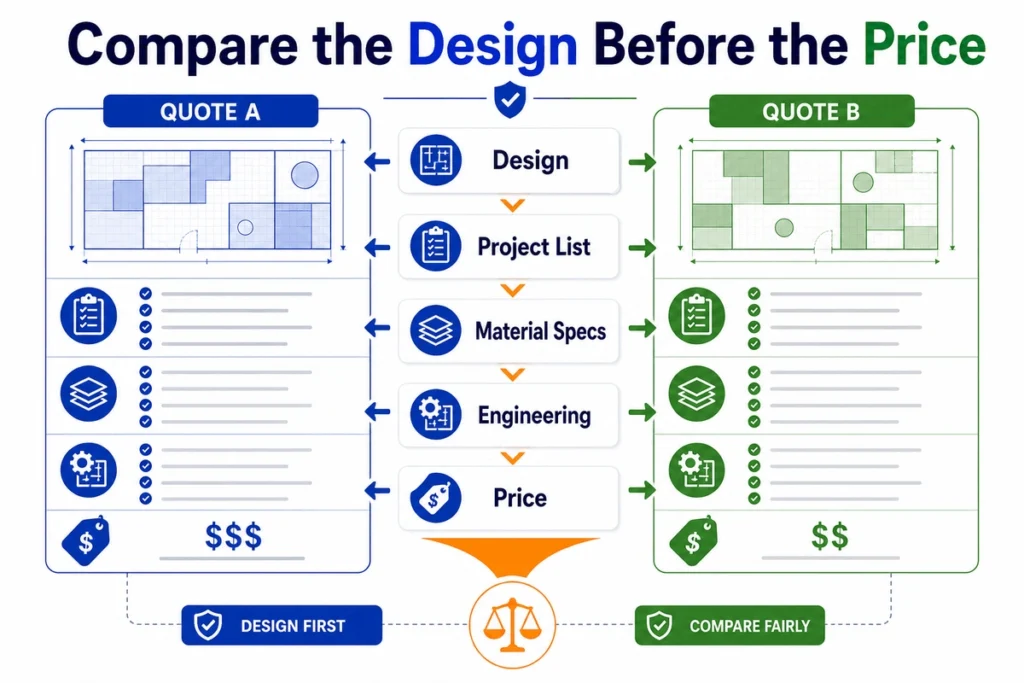
So the better order is simple: compare the design first, then the project details, then the material specifications, then the supplier’s engineering and after-sales support. Only after that does the price become meaningful.
Start by Comparing the Design, Not the Final Price
The same indoor playground space can produce two very different soft play designs. One supplier may include a large climbing structure, toddler area, ball pool, slide, ninja section, and party support. Another may use fewer activities, simpler soft play blocks, and lower installation complexity.
Both designs may look acceptable in a 3D rendering, but they are not the same commercial project.
Before you ask why one supplier is cheaper, ask what each supplier actually included. Which play events are in the design? How many levels are there? What is the platform area? Is the toddler zone included? Are entry gates, safety netting, floor mats, themed decorations, signage, and spare parts included? Does the quote include packaging and installation documents, or only equipment production?
If you are comparing suppliers, ask each one to provide a clear project list next to the layout. You want to know what you are buying, not only how much you are paying.
A professional playground equipment manufacturer should be able to explain the difference between two designs in plain language. If the answer is vague, the quote is not ready for serious comparison.
Ask What Materials Are Behind the Quote
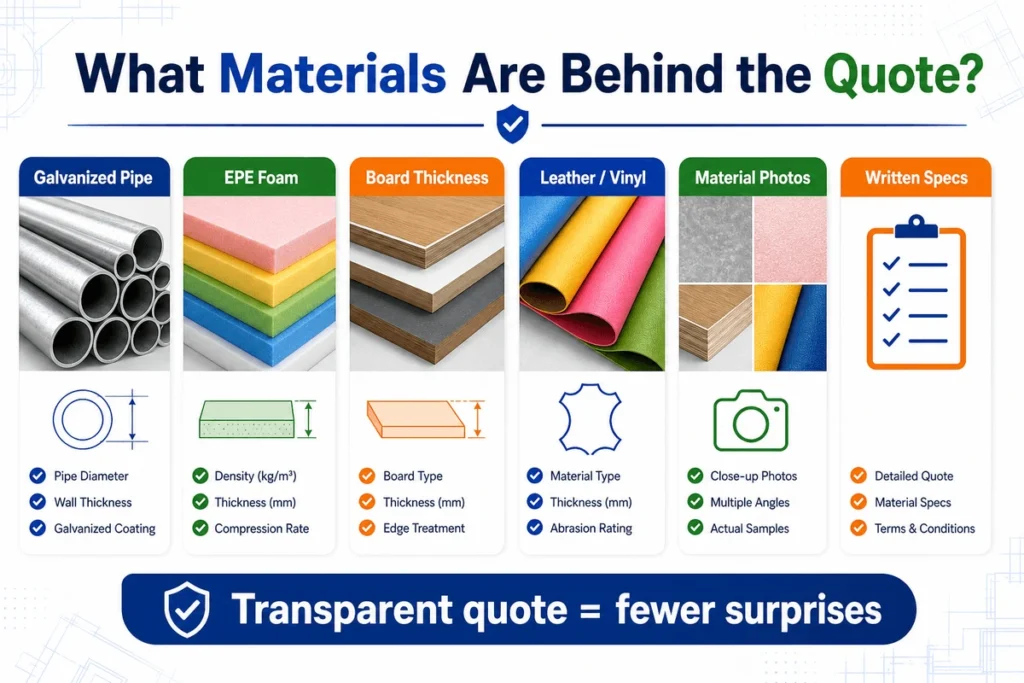
Once two suppliers are quoting for a similar design, the next question is material specification.
This is where many buyers stop too early. They ask, “Why is your price higher?” A better question is, “What material standard are you using for this order?”
For soft contained play equipment, ask for the specifications that affect safety, durability, and service life. What is the thickness of the galvanized pipe? What is the thickness of the EPE foam on the platform? What board thickness is used? What leather or vinyl covering is used? Can the supplier provide material photos?
These details are not small. A customer may see two drawings that look almost identical, but the actual equipment behind them may not perform the same way after one year of operation.
At Weiroo, our quote lists the material standards used for that order. We prefer this because it makes the conversation transparent. If a client wants to compare our proposal with another supplier, they can compare the design and the material specification instead of guessing what is hidden inside the price.
That transparency protects both sides. The buyer understands what is being purchased, and the supplier can explain the real reason behind the price.
Check Whether the Supplier Designs for Your Market Standard
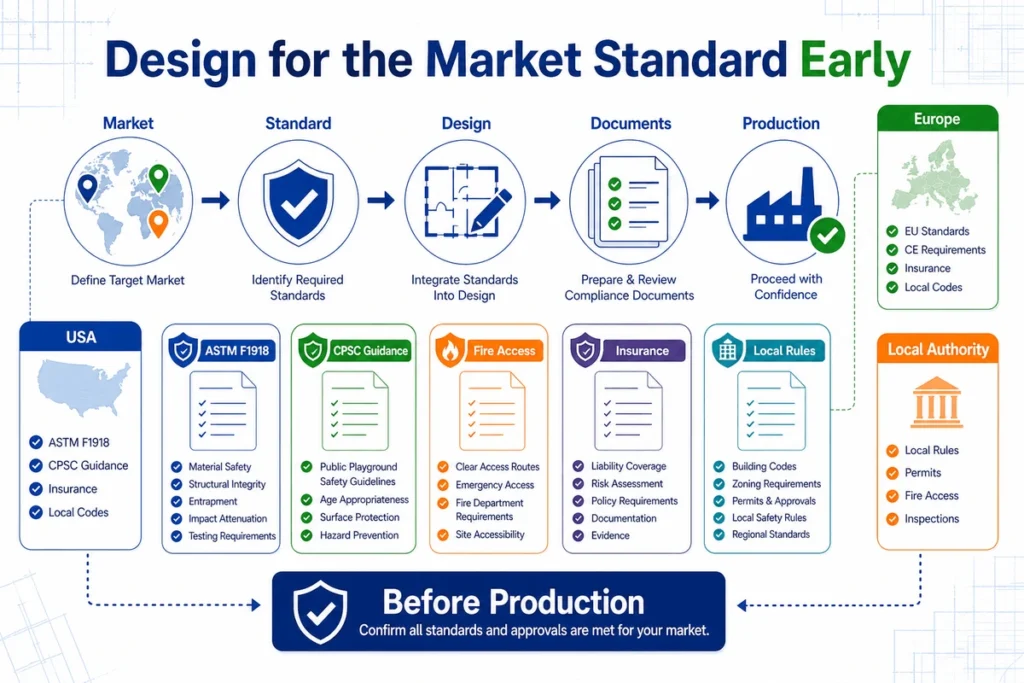
Soft play equipment standards should not be an afterthought. A supplier should think about the target market during the design stage, not after the buyer has already approved the 3D rendering.
For the US market, ASTM F1918 is an important reference for soft contained play equipment. The CPSC playground equipment guidance is also useful for understanding the safety conversation around children’s equipment.
For European projects, the supplier should understand that the design conversation may be different. For other countries, local fire, insurance, and inspection requirements may change again. The point is not that one rule fits every country. The point is that the supplier should know how to ask the right compliance questions before production.
This is where first-time owners are vulnerable. They may not know what standard to mention or what local authority may ask later. In that situation, the supplier’s experience matters.
Ask a simple question: “For my market, what standard or local requirement should we consider during the design stage?”
If the supplier can only answer with “do not worry,” that is not enough. You need a supplier who can explain how the market affects design, documents, materials, and installation.
The Hidden Risk: No Engineering Breakdown Team
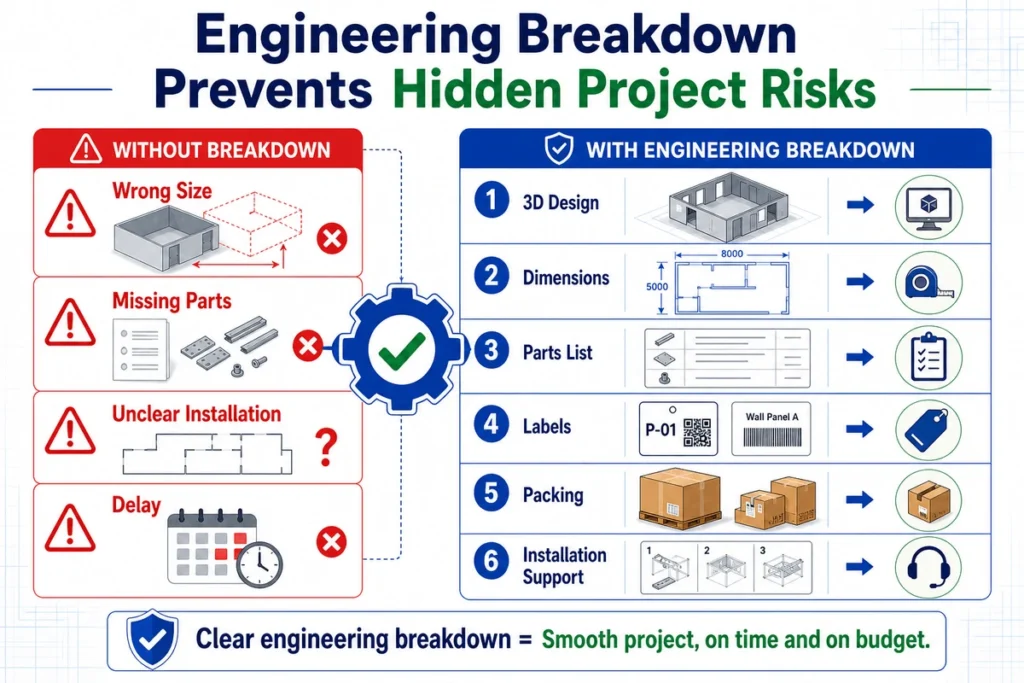
One of the biggest differences between suppliers is something buyers rarely see: the engineering breakdown team.
A soft play project does not move from 3D design to production by magic. Someone has to break the design into real manufacturing details: post positions, pipe lengths, platform sizes, foam parts, panel sizes, netting areas, connectors, labels, packing lists, and installation sequences.
If a supplier has a strict engineering breakdown process, many problems are caught before production. If they do not, the buyer may discover the problems only after the goods arrive.
We have seen this risk especially with small teams that just started doing international trade. They may have sales people, designers, and a factory partner, but they do not have a strong technical team to confirm every size and every part before production. The result can be painful: wrong dimensions, missing parts, unreasonable passages, unclear installation documents, or materials that do not match what the client expected.
The cost of this problem is not only the missing part. The real cost is time. Local workers may wait on site, the opening date may move, and every delay becomes harder to explain.
Here is the part most guides skip: after-sales support is not only about warranty. It is also about whether someone can help you solve installation questions quickly.
If a supplier cannot tell you who will handle technical communication after shipping, that is a risk.
Big Factory or Mid-Sized Manufacturer: Which Is Better?
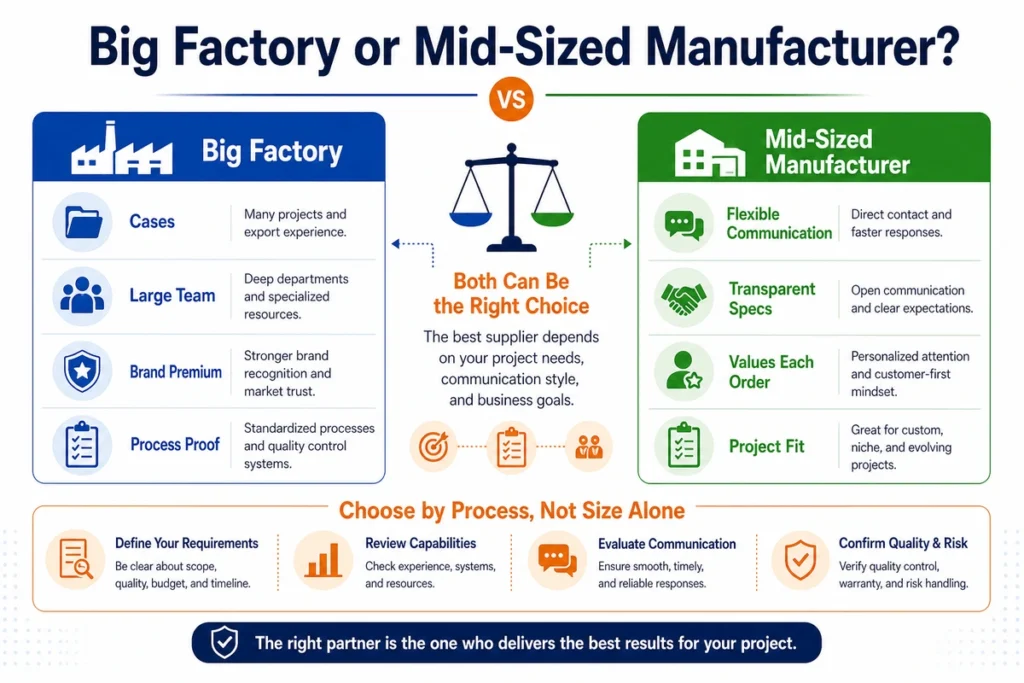
Many buyers assume the largest factory is always the safest choice. Sometimes it is. Large factories usually have stronger case libraries, more mature promotion channels, larger teams, better-known brands, and bigger production facilities. These are real advantages.
But size is not the only thing that matters.
Large factories can also carry a higher brand premium. Their process may be more standardized, but some first-time owners need more patient communication.
In my personal view, a good mid-sized manufacturer can also be a strong choice. A developing company often values every order because reputation still matters to its growth. It may be more willing to discuss details, explain specifications, adjust layouts, and protect the relationship.
That does not mean every mid-sized factory is good. It means you should judge by project experience, material transparency, engineering support, communication speed, design logic, and responsibility.
Installation Support Is Part of the Supplier Choice
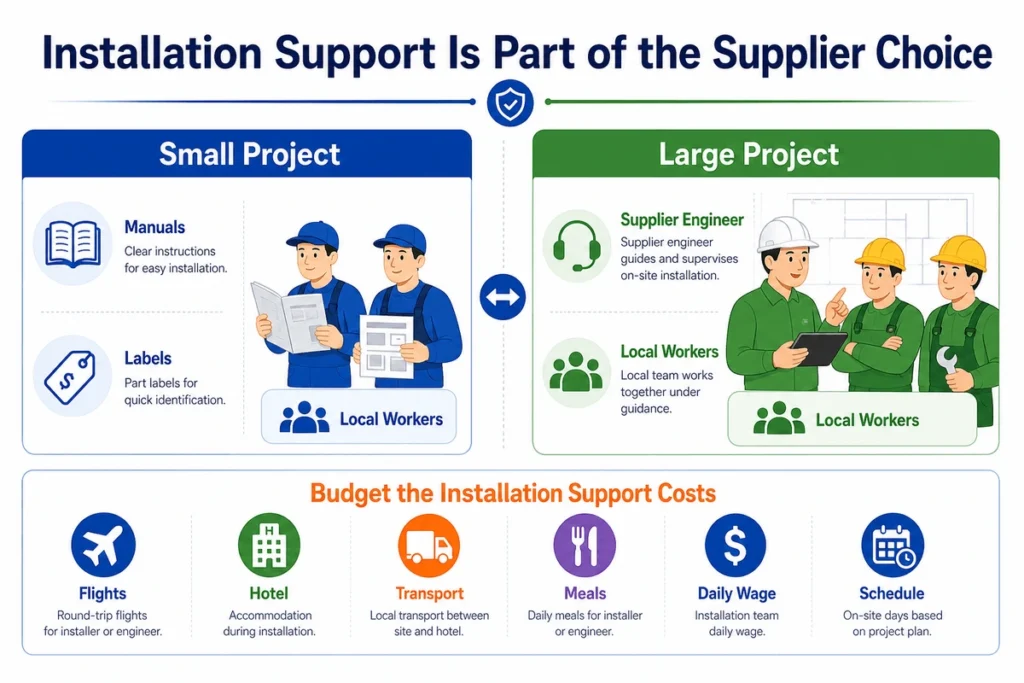
Installation is easy to underestimate because buyers often think the equipment cost is the main cost. For small projects, local workers may be able to install the equipment by following the supplier’s installation manual and drawings. That can work when the layout is simple and the supplier’s documents are clear.
For larger projects, the situation changes. A large indoor playground may need one or more supplier-side installers or engineers to guide the local team. Local workers can handle much of the physical work, but the supplier’s staff understands the structure and sequence.
This arrangement is often the most cost-effective. You do not need to fly in a full overseas team, but you still have professional direction during the most important stage.
The buyer should budget for round-trip flights, accommodation, local transportation, meals, and daily wages. At Weiroo, we estimate this during the quotation stage so the client understands the possible installation cost early.
If a supplier avoids the installation conversation, be careful. A smooth installation depends on design accuracy, packing accuracy, labels, manuals, communication, and site guidance. The equipment price alone does not show any of that.
Tariffs and Import Costs Belong in the Supplier Conversation
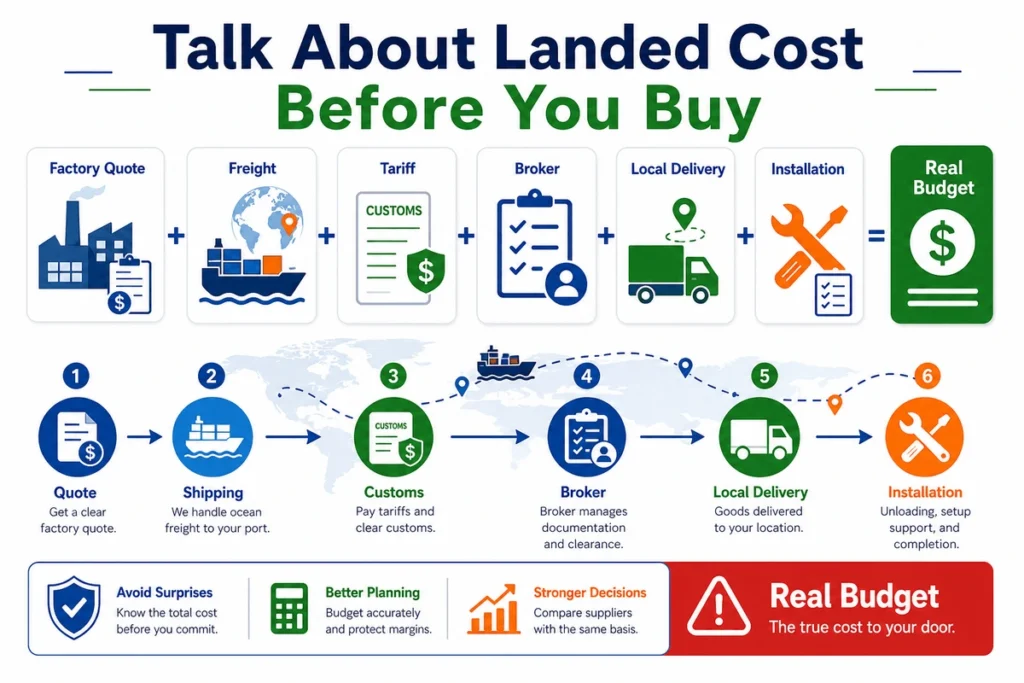
If you import soft play equipment, the supplier choice also affects your import preparation.
Tariffs are not paid to the supplier during the equipment quote. They are usually paid during customs clearance, and the exact cost depends on the destination country, product classification, and current local policy. Buyers should confirm details with their customs broker or local customs authority before importing.
For US buyers, the USITC Harmonized Tariff Information website and CBP’s basic importing guidance are useful starting points. The supplier can share experience and documents, but the buyer should still confirm final tariff and clearance details locally.
A buyer may think one supplier is cheaper, then later discover that freight, tariff, broker fees, local delivery, unloading, and installation support change the real landed cost.
If you are new to importing equipment, our guide on importing playground equipment from China explains how tariffs, logistics, documents, and shipping decisions affect the final budget.
What a Reliable Supplier Should Provide Before Production
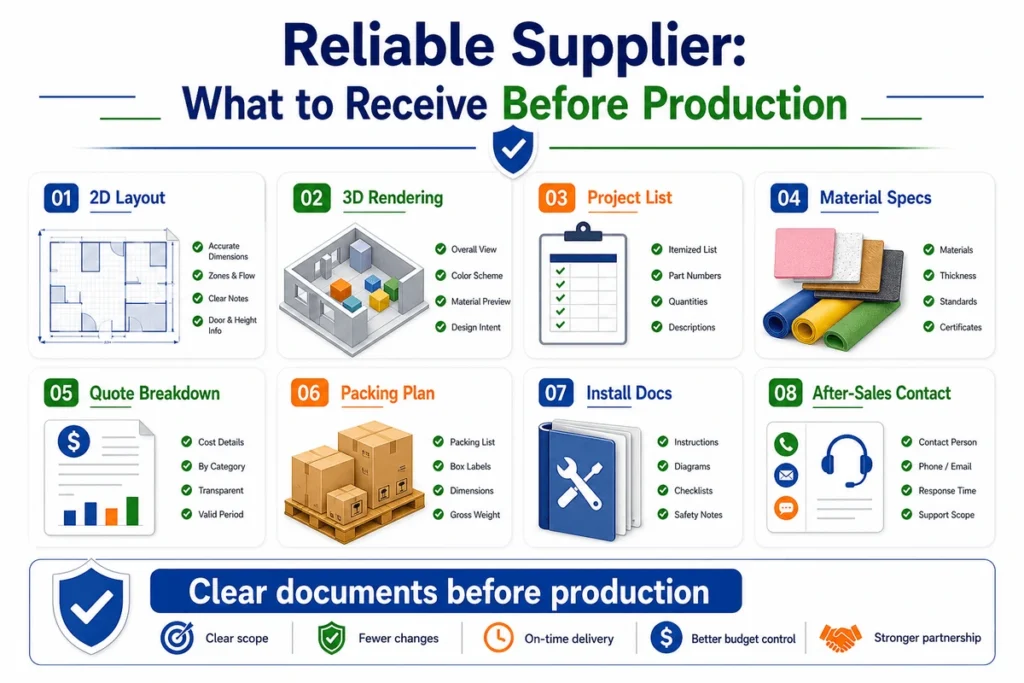
Before production starts, a reliable supplier should provide enough information for you to know what will be made, how it will be made, and how it will be installed.
At minimum, ask for a 2D layout, 3D rendering, project list, material specification, quotation breakdown, production confirmation, packing plan, installation documents, and after-sales contact. For complex projects, ask who will answer technical questions during installation.
You should also ask what documents may be provided for your target market. The answer may depend on the country, equipment type, and local authority, but the supplier should be able to discuss the topic clearly.
Good suppliers do not only sell equipment. They help convert your idea into a project that can be produced, shipped, installed, inspected, and operated.
That is especially important for indoor commercial playground equipment, because the customer is not buying a toy for home use. They are building a business space where safety, durability, traffic flow, supervision, maintenance, and customer experience all affect revenue.
If the supplier cannot provide clear documents before production, communication may become much harder after the container arrives.
How to Compare Two Supplier Quotes Fairly
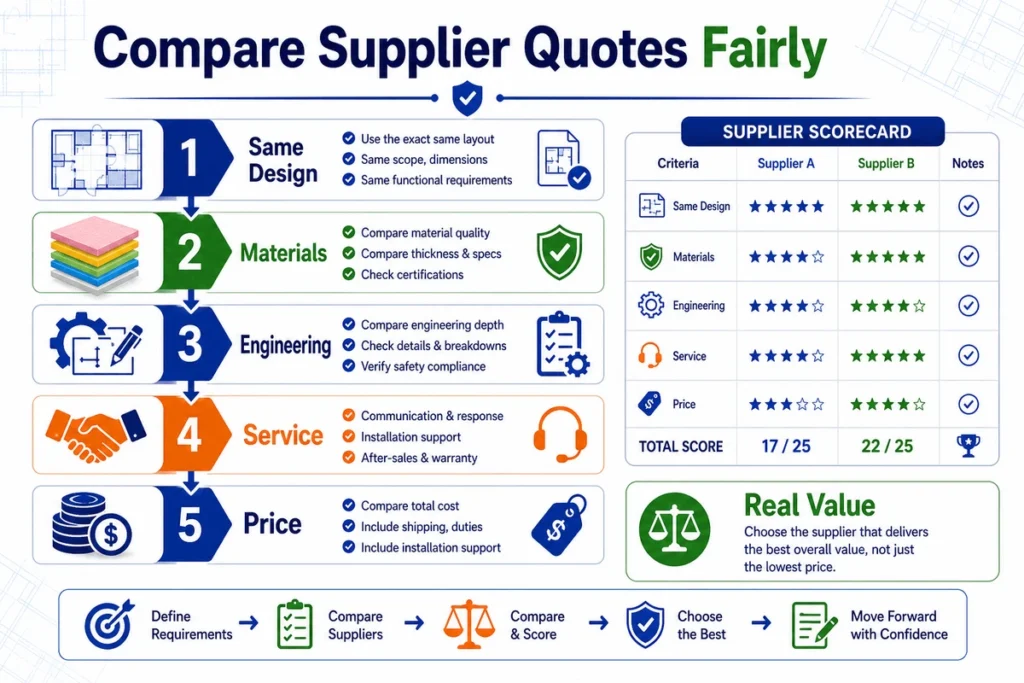
When you receive two quotes, do not start with the total amount. Use a fair comparison sequence.
First, compare the design. Are the play events, levels, zones, entrance points, safety areas, and themed elements the same?
Second, compare the material specification. Are the galvanized pipe, platform foam, board, leather, netting, and soft protection standards clearly listed?
Third, compare the engineering process. Does the supplier have a team that turns the approved design into accurate production and installation details?
Fourth, compare installation support. Can the supplier provide manuals, labels, remote support, or on-site guidance for a larger project?
Fifth, compare after-sales response. Who will answer questions after shipment? Who will help if a part is missing, mislabeled, or difficult to install?
Only after these checks should you compare price. A lower price with weak design detail, unclear materials, no engineering breakdown, and no installation support may become more expensive later.
This is the same logic I would use before choosing any supplier: same design, compare material; same material, compare engineering; same engineering, compare service; same service, then compare price.
Final Checklist Before You Pay a Deposit
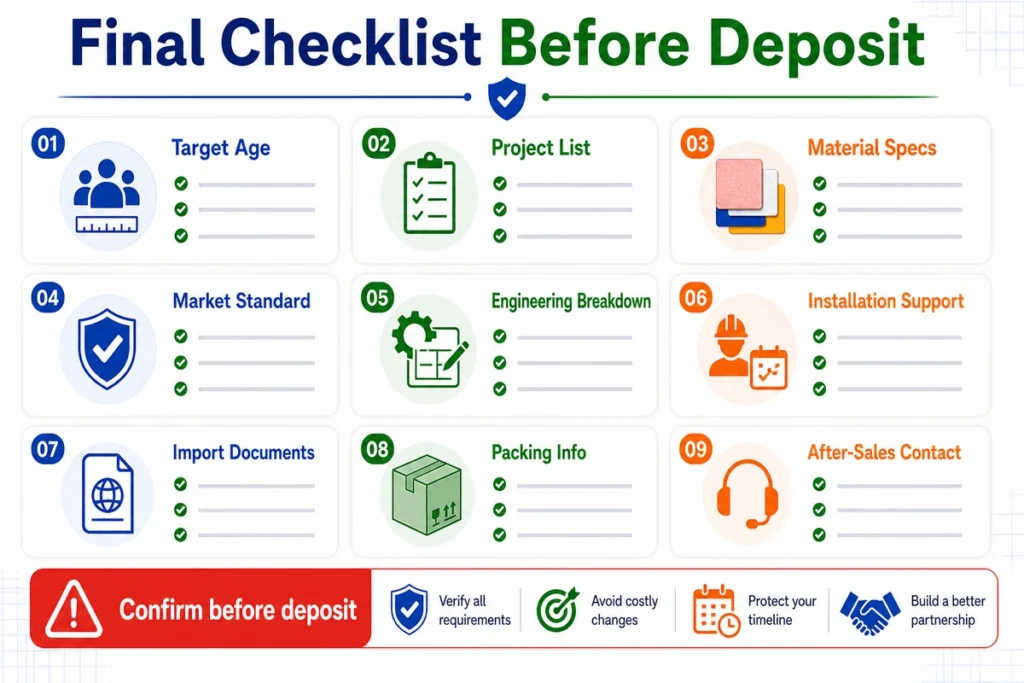
Before paying a deposit, slow the process down for one final check.
Make sure the design matches your target age group and business model. Confirm the project list line by line. Ask for material specifications in writing. Check whether the supplier understands your market standard. Ask who handles engineering breakdown, installation support, import documents, packing information, and after-sales contact.
This is not about making the supplier uncomfortable. A professional supplier should welcome these questions because they show that the buyer is serious.
If you already have a design or quote from another supplier, you can send it to Weiroo for a second review. We can help you look at the design logic, material specification, project details, installation plan, and possible missing costs.
Soft play equipment is only one part of your business. The supplier you choose will affect design, budget, shipping, installation, opening schedule, and long-term operation. Choose the team that can stay with the project after the 3D rendering looks good.
FAQ
How do I know if a soft play equipment supplier is reliable?
A reliable supplier should explain the design, project list, material specifications, compliance direction, installation support, and after-sales process before production. Do not judge only by a 3D rendering or a low price. Ask who will handle engineering breakdown, what material standards are used, how the parts will be packed and labeled, and who will support installation questions after shipment. If the supplier can answer these clearly and put key details in writing, the risk is much lower for your opening schedule.
Is the cheapest soft play equipment supplier always risky?
Not always, but a very cheap quote needs careful checking. Sometimes the design includes fewer play events, simpler decoration, thinner materials, or less installation support. The problem is not the low price itself. The problem is when the buyer does not know what was removed to create that price. Compare the design, material specification, engineering support, packing details, installation guidance, and after-sales response before deciding whether the cheaper supplier is truly better value for a commercial project during procurement.
What material details should I ask for before ordering?
Ask for the thickness of the galvanized pipe, the thickness of the EPE foam used on platforms, the board thickness, leather or vinyl specification, netting quality, soft padding details, and real material photos if possible. You should also ask whether these specifications are written into the quote or production confirmation. When two designs look similar, material details often explain the price difference. A transparent supplier should not be afraid to show what standard is being used for your order before production.
Do I need installers from the supplier?
For small soft play projects, local workers may be able to install the equipment with clear manuals, labels, and remote support from the supplier. For larger indoor playgrounds, it is usually safer to have one or more supplier-side installers or engineers guide the local team on site. You should budget for flights, accommodation, local transport, meals, and daily wages. Ask this during the quotation stage, because installation cost is part of the real project budget, not a last-minute extra.
Should I choose a big factory or a mid-sized manufacturer?
A big factory may have strong cases, mature departments, larger production capacity, and better-known branding, but it may also carry a higher premium. A good mid-sized manufacturer can be a strong choice if it has transparent materials, solid engineering breakdown, responsive communication, and real export experience. Do not choose by size alone. Choose by whether the supplier can explain the design, control production details, support installation, and stay responsible after the goods arrive at your site during installation.
Sources
- ASTM F1918 – reference for soft contained play equipment standards.
- CPSC Playground Equipment Guidance – general US playground equipment safety guidance.
- USITC Harmonized Tariff Information – official tariff information reference.
- CBP Basic Importing and Exporting – US importing process reference.