A 500 SQM Project – From Paper to Opening Day
Before I give you any numbers, I need to make one thing clear: every step in this process happens in sequence, not in parallel. You can’t start production before design is confirmed. You can’t install before goods arrive. You can’t pass inspection before installation is complete. The timeline I give you assumes each phase starts only after the previous one finishes – which means the biggest variable in this entire process is your own response time during the design phase.
A 500 sqm custom indoor playground project goes through these phases:
One thing that affects every phase of this timeline: how experienced is your supplier with indoor play place equipment at this scale and in your destination market? Suppliers who haven’t shipped to your country before will learn on your timeline. That’s a cost that doesn’t show up in the price quote.
Design and refinements: 2 weeks. This is the phase where your response time matters most. Every day you spend reviewing drawings is a day added to this phase. The faster you confirm, the faster we move.
Production: approximately 4 weeks (25 days). Once drawings are locked, production starts. This part doesn’t require your involvement – but you need to know that the clock is running on our end. Every day counts here.
Shipping and customs: approximately 6 weeks. This is the part you have the least control over. Ocean transit time, port clearance, inland transport to your site – each has its own margin for delay.
Installation: approximately 3 weeks. This assumes your site is fully ready. Any site preparation delays will extend this phase and generate real costs – storage, demurrage, idle labor.
Buffer and soft opening: 2 weeks. You need time to commission equipment, train staff, and pass fire inspection before you open. Rushing this phase is how you open with problems nobody notices until the first busy weekend.
Total: approximately 17 weeks. That’s about 4 months for a 500 sqm project, assuming nothing goes wrong. Larger projects or projects shipping to remote markets take significantly longer.
Your Container Arrived. Your Site Wasn’t Ready. Now You’re Paying.
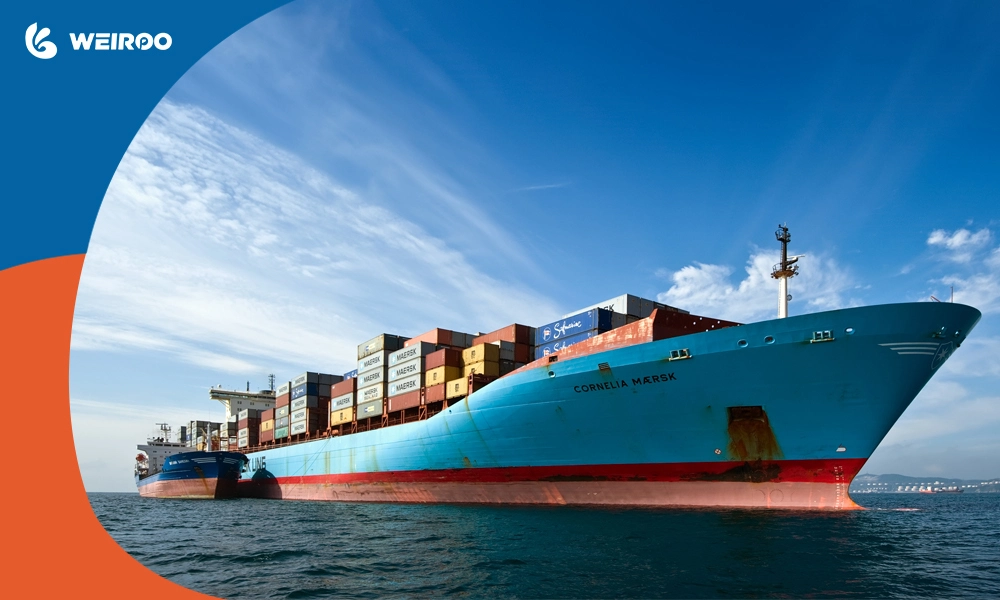
This is the thing I want every client to understand before they sign anything.
When our container arrives at your site, your site must be ready. If it’s not, you pay the demurrage – not us, not the shipping company, you. The number runs into hundreds of dollars per day, per container. That’s not a penalty clause in a contract, that’s a daily operating cost that compounds fast.
And there’s no negotiating your way out of it after the fact. Shipping lines don’t wait because your site wasn’t ready. Ports charge daily storage by the day. Once customs clears and your goods are sitting on the dock because your site isn’t prepared to receive them, every hour costs money.
Before we release a shipment, we confirm four things with you: the site is cleared and ready for installation, the floor is at the stage where our team can start anchoring, fire safety and HVAC have been inspected and approved, and you have written confirmation from your local fire authority on the installation. If any one of these isn’t checked off, we don’t ship. It’s not negotiable, and it’s not being difficult – it’s the only thing that protects your investment.
The Three Site Preparation Delays We See Most Often
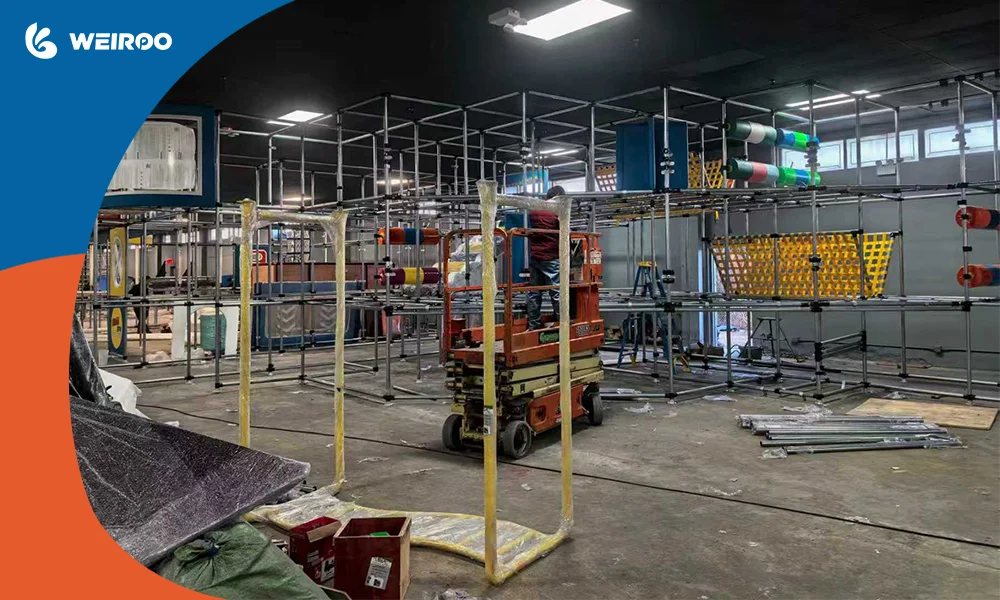
I’ve been on-site in dozens of countries for installations. The most common delays fall into three categories – and all three are within your control if you think about them before you sign your lease.
Fire sprinkler heads. Local fire marshals frequently require sprinkler heads to be repositioned – often above or even inside the play structure mesh. If this hasn’t been discussed with the fire department during the design phase, you won’t find out until the equipment arrives and an inspector says it doesn’t meet local code. At that point it’s not a modification, it’s a rebuild. And if the modification isn’t approved, our structure can’t go up. The cost of repositioning sprinkler heads during construction is trivial compared to the cost of discovering this problem after your container has already cleared customs.
HVAC not completed. We’ve had several projects where workers arrived to find the ductwork wasn’t finished. In summer, this means 100+ degree warehouse temperatures while crews are trying to install. Or the ducts are in the exact path of a large slide section and have to be rerouted before we can continue. Both are entirely avoidable with proper scheduling coordination.
Unlevel or unfinished flooring. Our steel substructures require bolting to the ground with precision alignment. If your concrete floor is uneven, or the self-leveling compound hasn’t fully cured, we can’t do accurate positioning. Installing steel plate on wet or unlevel concrete creates structural stress that shows up as loosening over time – which is a safety issue, not just a quality issue.
The Single Most Underestimated Step: Your CAD File
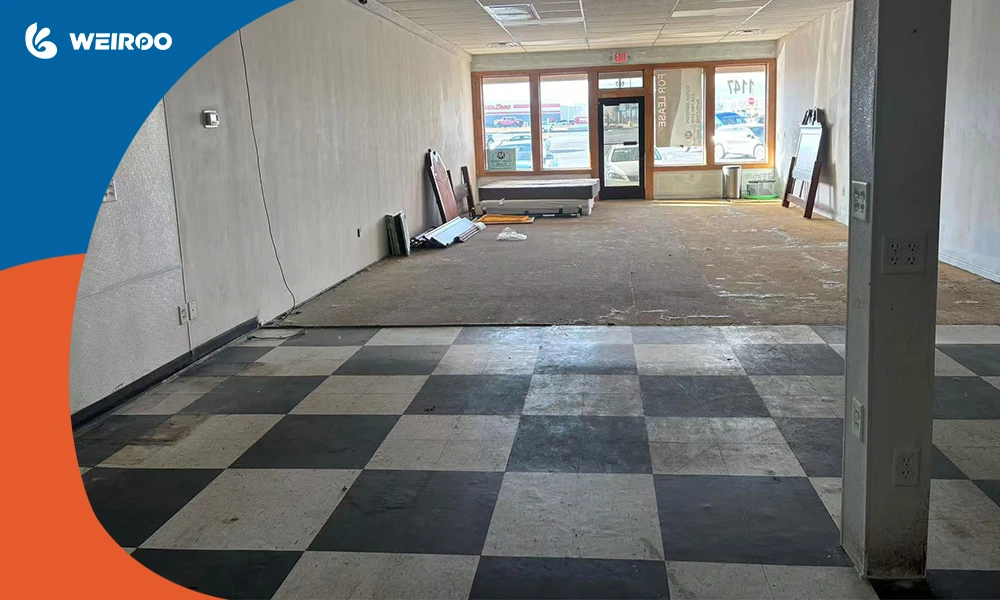
There’s one step in the custom process that most clients underestimate more than anything else, and it sits right at the beginning.
Our design is built on the measurements you give us. Every dimension is locked to your site. That means the data you send us is the data we manufacture to – your site dimensions are not adjustable after production starts without generating real rework costs and delays.
If your site dimensions change after the drawings are confirmed, the equipment has to be adjusted. Change one dimension, and the structural members need to be recut. That’s a chain reaction.
Before we enter production, you need to triple-check one thing: the CAD file you send us is accurate, and it matches the current state of your site. Has the site been modified since measurement? Are there structural elements that weren’t in the original survey? Any discrepancy between your file and reality becomes a manufacturing problem, and manufacturing problems happen on your timeline, not ours.
One real example from our experience: a Netherlands client had a perfect site – open span, no columns, a genuinely beautiful blank canvas. But he came to us with a request that confused me at first. He wanted every distinct play zone physically separated by walls. Full wall partitions between each area.
My first reaction was that this was a waste. Wall construction costs money, and subdividing an open space into smaller zones seemed to defeat the purpose of having the open area in the first place.
So I asked him directly: why do you want these partitions?
His answer changed my recommendation entirely. He wanted quiet. He was building a space where parents could sit and actually relax while their kids played, not be surrounded by screaming children and the sound of slides. He wanted acoustic separation because his business model depended on parents staying longer, ordering more, and coming back.
What I proposed instead: a full-wall of acoustic glass along the parent seating area. Parents could see their kids in every zone from their seats, watch them without having to get up, but sit in a genuinely quiet, climate-controlled space that made them want to linger. Quieter space, longer stays, higher check sizes – and we didn’t build a single unnecessary wall.
The lesson: sometimes a client’s stated solution masks the actual problem. Dig one level deeper before you cost-engineer the wrong answer. A good supplier doesn’t just execute what you ask for – they help you understand what you’re actually trying to solve, and then design around that. When you’re ready to start the conversation with an indoor play equipment manufacturers like us, bring these questions with you – not just the concept, but the site reality.
Before You Contact Any Equipment Supplier, Confirm These Four Things
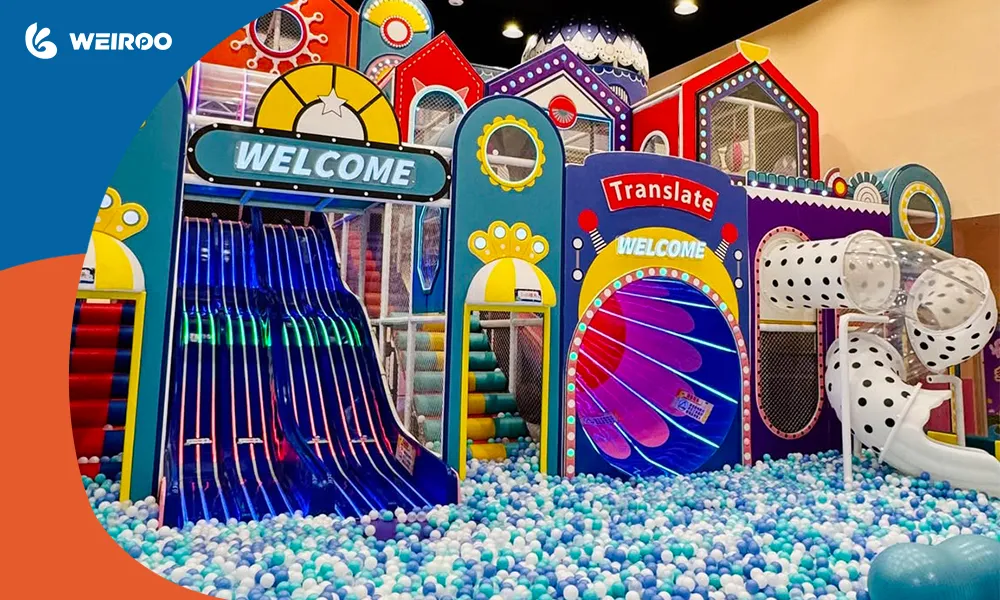
Before you reach out to any playground equipment manufacturer, get these four sorted:
What is the current construction status of your site? Fire inspection approved? HVAC ductwork complete? Floor flat and cured? If any of these aren’t confirmed before production starts, you are building a schedule delay and extra cost into your project on purpose.
When was your site measured, and by whom? Has the site been modified since measurement? Were there any structural additions or changes after the original survey? This determines whether your CAD file reflects reality or an outdated version of your site.
Does your lease give you enough lead time? A 500 sqm project needs approximately 4 months from shipment to opening – that’s production, logistics, installation, and commissioning. Does your lease give you this window before your rent starts? If not, you may be paying rent on an empty warehouse while you wait for equipment to arrive.
Have you talked to your local fire authority about their specific requirements for play structures? Do they have written specifications on structural height, spacing, and sprinkler head placement? Verbal approval from a fire inspector is not a permit. Get it in writing, or get ready for a surprise when you need your final inspection.
Frequently Asked Questions
How long does a custom indoor playground really take from design to opening?
For a 500 sqm project: approximately 2 weeks for design refinement, 4 weeks for production, 6 weeks for shipping and customs, 3 weeks for installation, and 2 weeks for commissioning and soft opening – totaling approximately 17 weeks or 4 months. Larger facilities or projects shipping to remote markets take considerably longer. This assumes everything goes smoothly – any site preparation delays or customs issues extend the timeline directly. If you’re working with a proper indoor playground business plan, you’ll have factored this timeline in from the start.
Why does my site absolutely have to be ready before the container arrives?
Because demurrage is your cost, paid daily to the shipping line or port authority. For a container arriving at an international port, daily demurrage can run hundreds of dollars per container per day, and once customs clears, storage fees at the port or bonded warehouse start accumulating immediately. This isn’t a contractual penalty – it’s an operational cost that builds every day your site isn’t ready to receive the shipment. Confirming site readiness before we release goods is protecting your own money. If you’re unsure about the full import process, our guide to importing playground equipment from China covers the complete logistics chain and what you need to have ready at each stage.
What are the most common site preparation failures?
Three show up most frequently: fire sprinkler heads that don’t meet local code (requires advance coordination with your fire department during design, not after equipment arrives), HVAC ductwork incomplete or blocking equipment paths (coordination between trades before installation), and unlevel or insufficiently cured flooring (self-leveling compound needs proper cure time before our teams can begin precision anchoring). All three are avoidable with proper pre-installation coordination. Each one that slips through adds direct cost to your project in labor delays, storage fees, or outright rework.
What does accurate site measurement actually require?
Site measurement should ideally be done by someone with experience measuring for custom play installations – not just a general contractor. The measurement needs to include exact column positions and dimensions, floor flatness deviation across the full area, ceiling height at multiple points (not just one), and the exact location of any existing structure, ductwork, or utilities that will affect equipment placement. Any measurement error becomes a manufacturing error. We’ve seen projects delayed by weeks because a column was 5 centimeters off from what the client reported – and that 5 centimeters meant a structural member had to be remanufactured.
What does “site ready” actually mean before installation begins?
Site ready means: the space is cleared and clean, the floor is level, cured, and ready for precision anchoring, all fire safety systems are installed and have received written inspection approval, HVAC is complete and will not obstruct any equipment paths, adequate lighting and ventilation are in place for installation crews, and the building’s overall fire inspection for the space has been approved. If you’re working with indoor playground space and height requirements from your local authority, now is the time to confirm those have been met. Until all of these conditions are confirmed in writing, installation crew dispatch is premature and your project timeline is at risk. When you engage with indoor playground ROI analysis for your project, these pre-installation costs should be part of your upfront investment calculation – not treated as surprises that come after equipment is already on site.