A space themed indoor playground is still one of the strongest choices for 2026.
But here is the thing: choosing an indoor playground theme is not only about what looks best in a 3D rendering. A theme has to match the size of the venue, the target age group, the budget, the lighting plan, the soft decoration cost, and the way the business will actually operate after opening.
Theme idea lists are useful, but not enough for a real commercial project. A theme that looks exciting online can become expensive or hard to maintain if it ignores the site conditions.
Based on our project experience, the best indoor playground theme is not always the most decorative one. It is the one that creates a clear memory point while staying practical for production, shipping, installation, cleaning, and operation.
Why Theme Choice Is Not Just About Looking Good
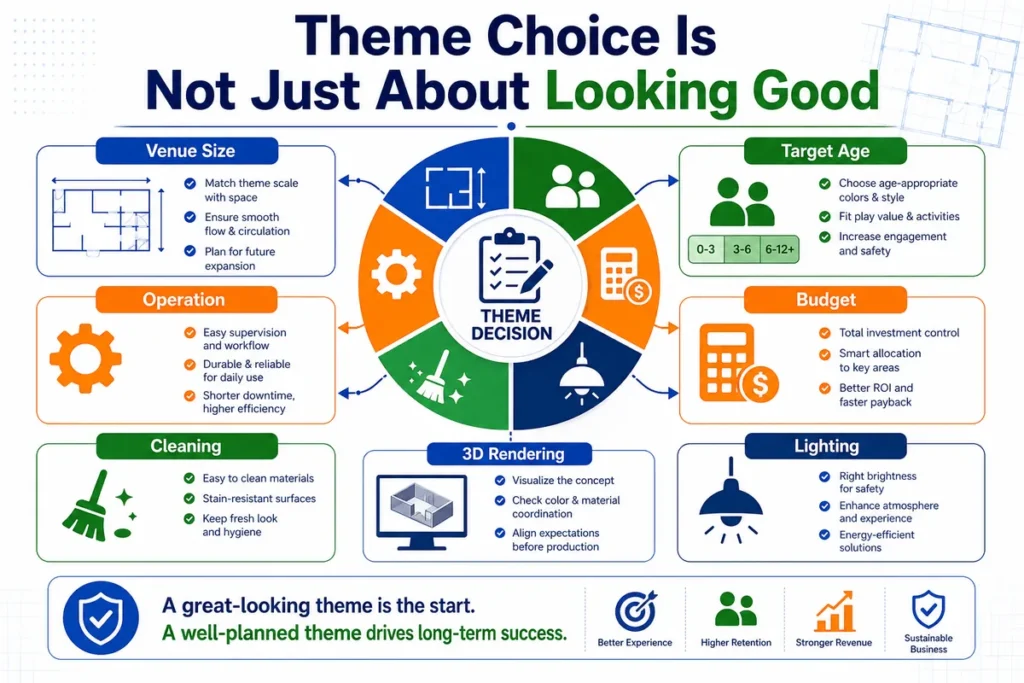
Most owners begin with a simple question: “Which theme is popular?” A better question is: “Which theme fits my venue, my customers, and my budget?”
A 500 sqm play center and a 120 sqm restaurant play area should not choose themes in the same way. A toddler-focused soft play zone and a family entertainment center for older children also need different design logic.
The most common mistake is making the theme too complicated. In a 3D rendering, many decorative panels, soft shapes, and special elements can make the design look rich. On site, those same details may increase production cost, shipping volume, installation time, and future cleaning work.
A mature design does not need to cover every corner with decoration. Strong color matching, repeated graphic language, a few main visual points, and clear zoning can create a stronger result with better cost control.
1. Space Theme: Best for Large Venues and Strong Visual Impact
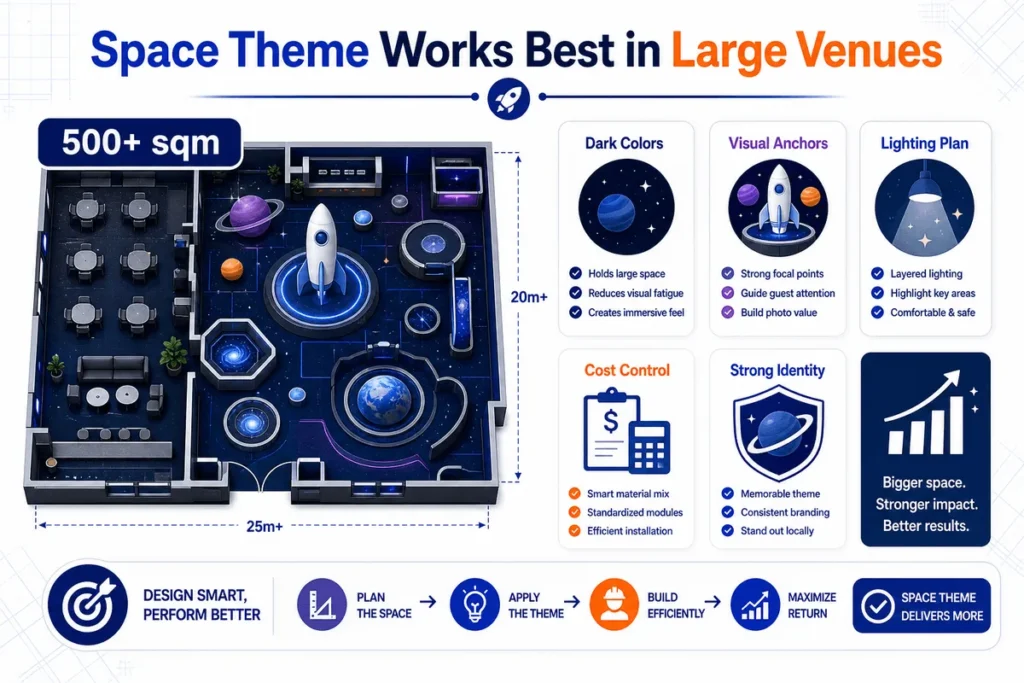
Space remains one of the most useful commercial themes because it works well for large venues, shopping malls, family entertainment centers, and projects that need a bold first impression. Dark blue, silver, black, orange, stars, planets, and control-panel patterns can create a strong atmosphere.
From our experience, a dark theme can hold a large space better than a very light theme. When the site is over 500 sqm, light colors can make the venue feel empty unless the designer adds many decorative details. A deeper space theme gives the room more weight, even when the layout includes wide passages and safety zones.
That does not mean every space theme should be dark or expensive. An entrance arch, a mission-control wall, a ball pool area with planet graphics, and a few strong color lines can be enough. You do not need to turn every panel into a spaceship.
One useful reference is our India case, Zingeria space themed mall playground in Pune. This theme works because it supports the venue’s visual identity and makes the play center easier to remember.
If you are talking with an indoor play equipment supplier, ask how the space theme will be controlled in cost. The answer should include color system, main decorative points, lighting plan, and which details are necessary for production.
2. Jungle Theme: Safe, Natural, and Easy for Younger Children
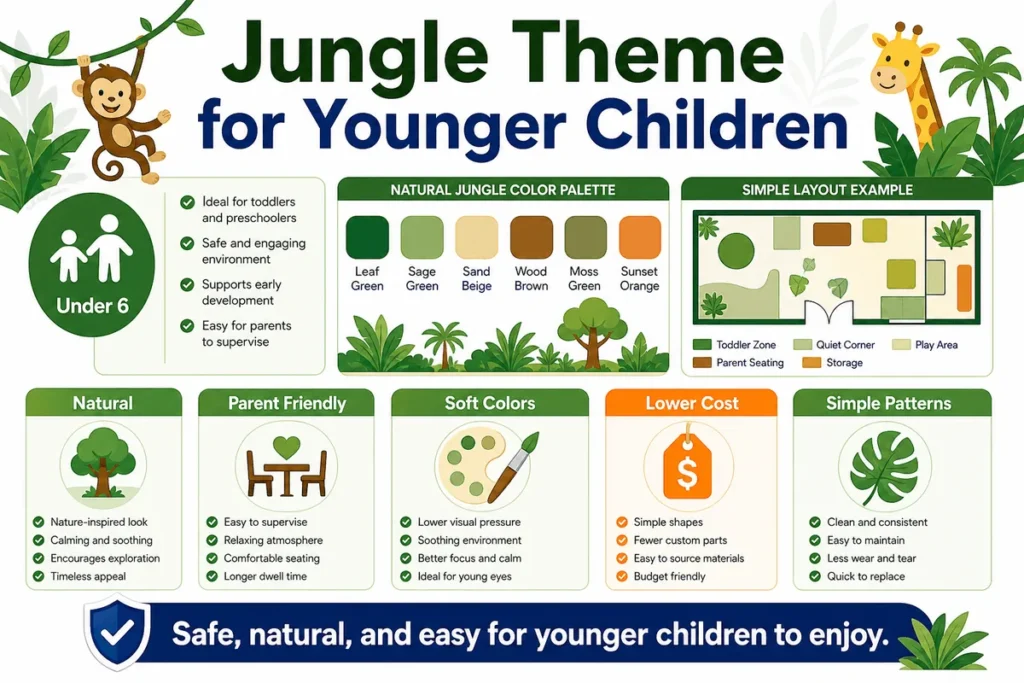
Jungle is a strong theme for younger children because it feels friendly, natural, and easy to understand. For children under 6, this matters. They do not need an overly intense visual environment. They need soft colors, clear zones, simple animals, leaves, trees, and a space that parents feel comfortable entering.
A jungle theme can work in many venue sizes. In a smaller indoor playground, green, wood tones, leaf patterns, animal icons, and a few soft tree shapes can create enough theme feeling without making the room crowded. In a larger venue, the designer can add more adventure elements, such as climbing routes, cave graphics, bridge visuals, or a larger entrance feature.
The budget advantage of jungle is that it does not always need complex soft decoration. With good colors and graphics, the theme can feel complete with fewer shaped elements.
That said, jungle themes can become messy if too many animals, colors, and patterns are used at once. A good design should choose one visual direction: cute, adventure, or natural family play.
3. Ocean Theme: A Friendly Theme for Toddlers and Family Play
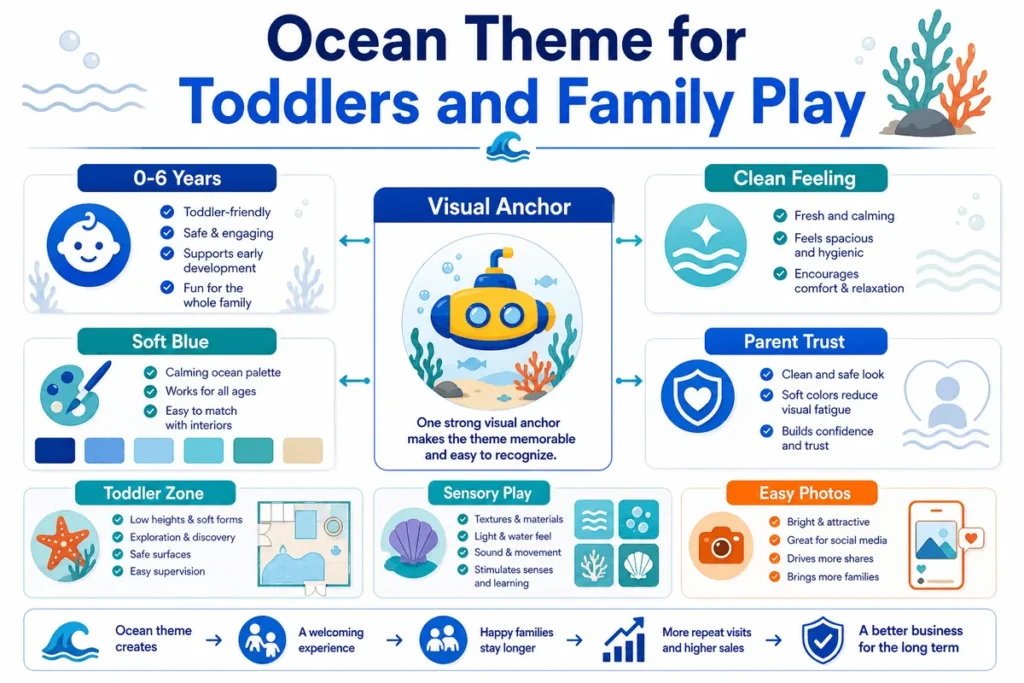
Ocean is another theme we often recommend for younger children, especially for 0-6 year old play areas. Blue tones feel clean, soft, and safe. The theme naturally fits toddler zones, ball pools, slides, sensory panels, and parent-child play.
The risk with ocean is that it can become too ordinary. Many play centers use blue, waves, fish, and sea animals, so the result can look generic.
To make an ocean theme stronger, choose a clear main visual idea: a submarine, coral reef, underwater tunnel, whale graphic, wave system, or small explorer story. One or two visual anchors are enough.
Ocean also works well for venues that want to look clean and bright in photos. For parents, a blue and white play space can feel more hygienic than a very dark or intense environment.
If your goal is low-age soft play, ocean is one of the safest theme directions. It is easier to control than cyberpunk and usually less visually heavy than space.
4. Candy Theme: Strong for Birthday Parties and Photo Sharing
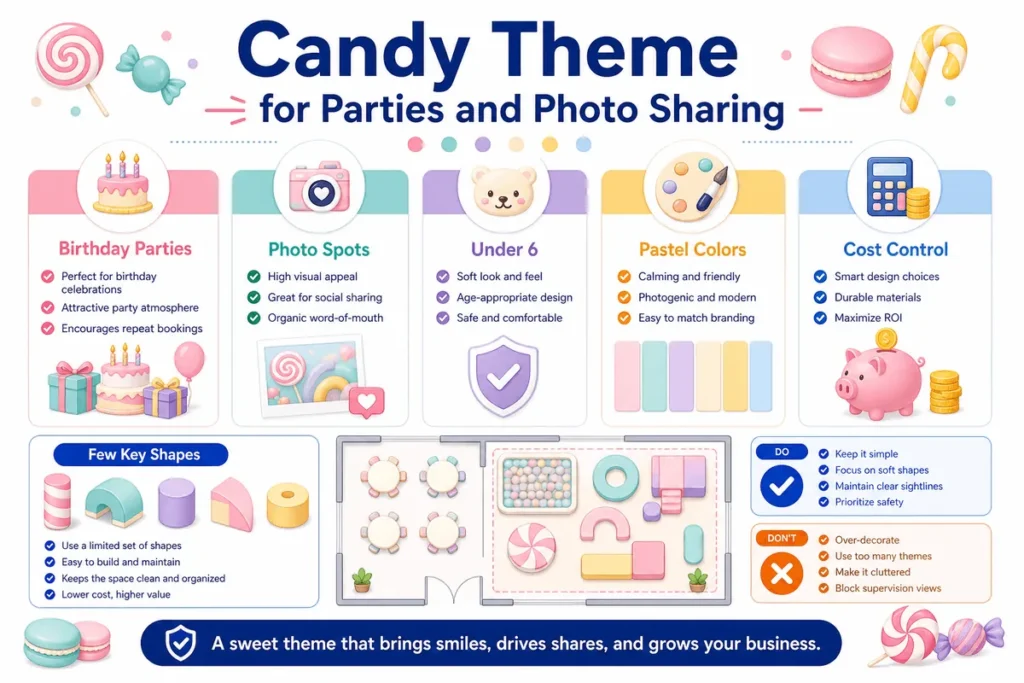
Candy and macaron themes are popular because they are bright, friendly, and easy to share on social media. They work especially well for birthday parties, young children, and cheerful family venues.
A candy theme can use soft pink, mint green, yellow, lavender, cream, round graphics, candy stripes, cake shapes, and pastel color blocks. Parents often read these colors as gentle and child-friendly.
But candy is also a theme where cost can get out of control. In the rendering stage, it is tempting to add many soft candy shapes, wall decorations, arches, clouds, cakes, and sculptural elements. Those details are attractive, but each one may add production cost, packing volume, and installation work.
A smarter approach is to build the theme through color and pattern first. Use macaron colors, repeat simple round shapes, create one or two photo spots, and use soft decorations only where they matter most.
Our Pink Candy Themed Playground in Mongolia case shows how a sweet theme can become a clear brand identity. The lesson is that color discipline and visual consistency can make the theme feel complete.
5. Cyberpunk Theme: A Bold 2026 Choice for Older Kids
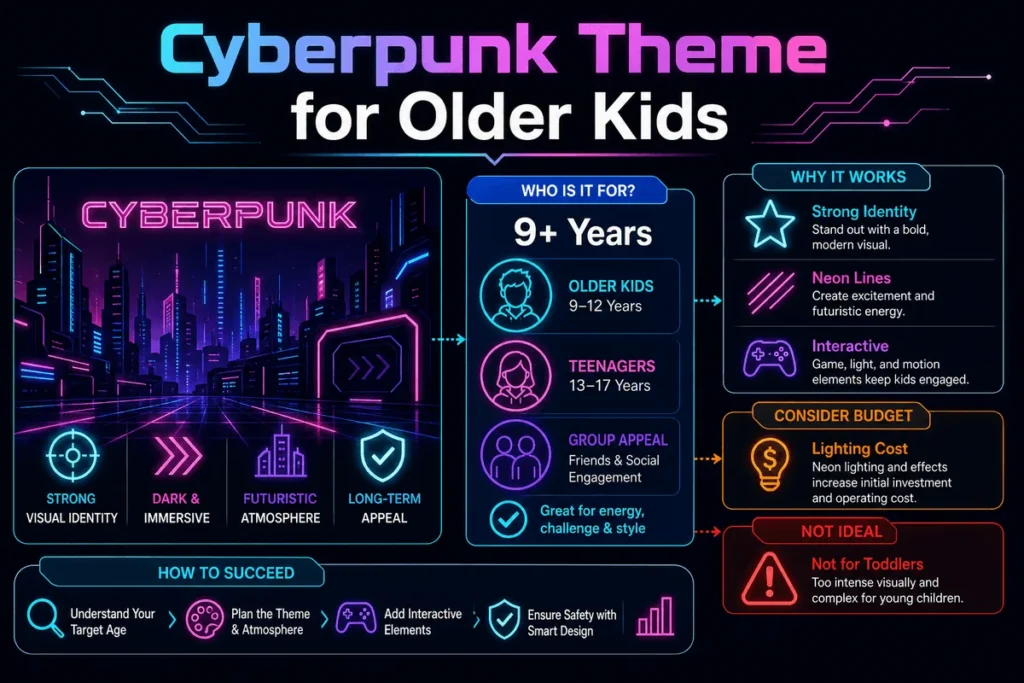
Cyberpunk is not the safest theme, but it can be powerful in the right venue. It suits owners who want a modern atmosphere for older children, teenagers, and families looking for something different.
The theme usually depends on dark backgrounds, neon lines, futuristic graphics, interactive walls, light strips, digital patterns, and strong contrast. This is why it often works better in larger venues or high-energy FECs.
It is not always the best choice for children under 6. Very young children usually respond better to candy, ocean, or jungle because those themes feel softer and safer. Parents of toddlers may also prefer a brighter, cleaner, warmer atmosphere.
The main cost issue with cyberpunk is lighting. If the lighting is weak, the theme can look flat. If too much lighting is added, cost and maintenance rise.
For the right project, cyberpunk can create a strong brand image in 2026. For the wrong project, it becomes expensive decoration.
How to Match the Theme With Venue Size
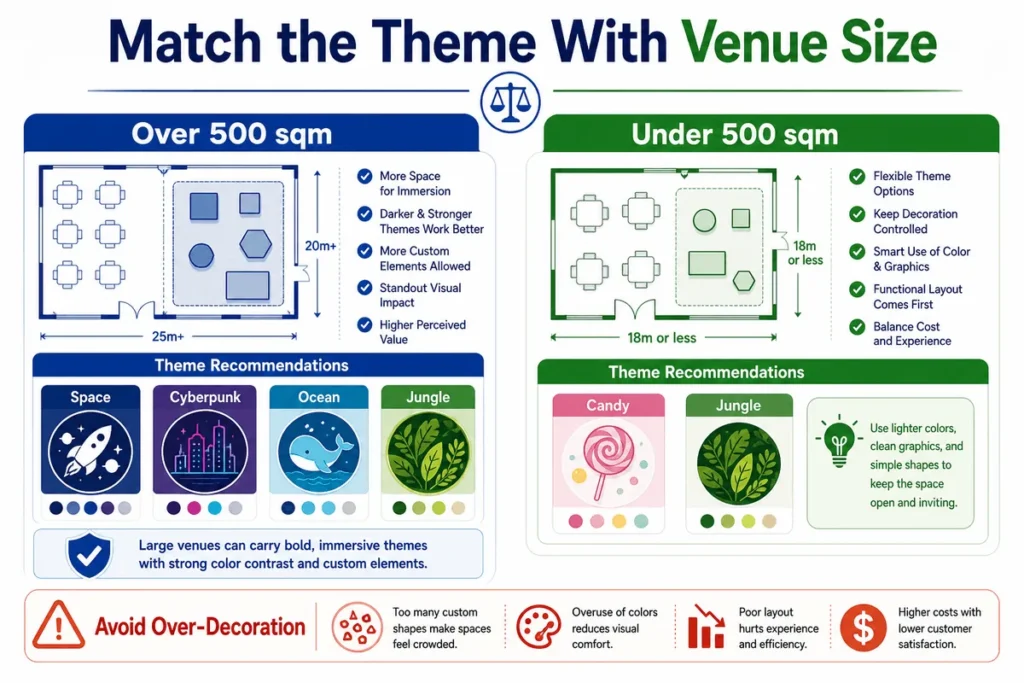
Venue size should influence theme choice more than many owners expect.
For venues over 500 sqm, I usually prefer themes with stronger visual weight, such as space, cyberpunk, or other darker technology-inspired directions. Large spaces can feel empty if the theme is too light. A deeper color system and clear visual anchors help the design feel complete.
For venues under 500 sqm, theme flexibility is higher. Space, ocean, jungle, candy, or softer themes can all work if the color system is controlled. A smaller venue does not need heavy decoration, because too many shaped elements can make the space feel crowded.
This is where a custom design process matters. A good supplier should not simply copy a theme from another project. They should review your floor plan, ceiling height, column positions, target age group, and budget before recommending the theme direction. If you want to see how this process connects with layout and 3D design, our article on custom indoor playground design explains the workflow in more detail.
How to Match the Theme With Age Group
Theme choice should also follow the target age group.
For children under 6, candy, ocean, and jungle are usually safer choices. They feel soft, friendly, colorful, and easy for parents to accept. These themes work well for toddler areas, restaurant play zones, small indoor play centers, and family-focused venues.
For children around 6-9, space, jungle adventure, ocean adventure, and light technology themes can work well. They can handle stronger visual storytelling, but the space still needs to feel safe to parents.
For children over 9, the theme usually needs more energy. Cyberpunk, ninja, sports, challenge, and interactive technology themes may feel more attractive because older children want movement, challenge, and a stronger sense of identity.
The theme is not only for children. Parents also judge whether the venue feels clean, safe, high-quality, and worth paying for. That perception can affect reviews, birthday bookings, and repeat visits.
The Budget Trap: Too Many Soft Shapes and Decorative Panels
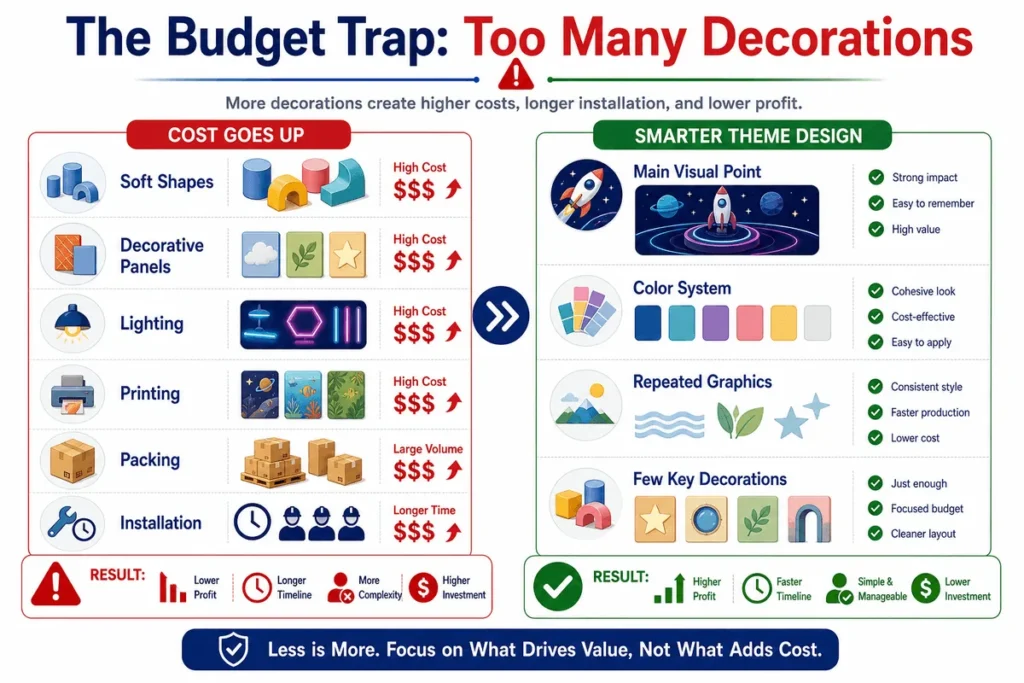
The biggest theme budget trap is over-decoration.
Soft shapes are important because they help create the theme. A candy arch, planet shape, tree trunk, submarine panel, or neon-style feature wall can become the memory point. But when every corner has a custom soft shape, the cost rises quickly.
Decorative panels can create the same issue. In a rendering, many panels make the theme look rich. In production, they need materials, printing, cutting, foam, covering, packing, and installation.
That is why we prefer a more controlled method: main visual point, color system, repeated graphic language, and a few important decorations. This still gives the customer a themed venue, but the budget stays more realistic.
If you are buying soft play indoor playground equipment, ask the supplier to separate necessary theme elements from optional decorations. That one conversation can prevent a lot of budget pressure.
Lighting Can Change the Theme More Than You Think
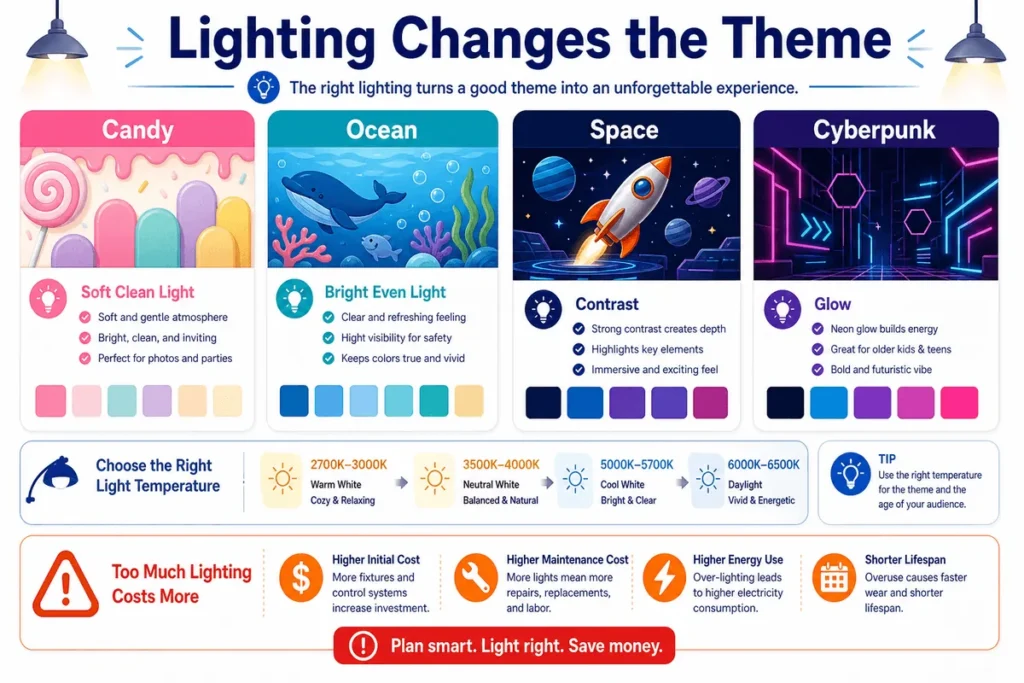
Lighting is one of the most underestimated parts of indoor playground theme design.
The color temperature of the lights can change how the equipment looks to the human eye. A candy theme may look soft and clean under the right light, but dull under poor lighting. Space and cyberpunk themes depend even more on lighting because the atmosphere comes from contrast, glow, and depth.
Still, more lighting is not always better. Extra light strips, effects, and illuminated decorations add cost and maintenance. The design should decide where lighting creates real value and where color matching can do the work more efficiently.
For commercial projects, lighting should serve the theme, photos, parent comfort, and daily operation. It should not only look exciting in the rendering.
How Weiroo Helps Choose the Right Theme
Weiroo’s role is not only to make a theme look good in a picture. The harder job is helping the client decide which theme can work on site.
We look at venue size, ceiling height, columns, target age group, equipment mix, parent area, birthday party needs, budget, production difficulty, shipping volume, and installation support. Then we use the theme to support the business model.
For example, a large venue may need a darker theme to hold the space. A small toddler project may need a softer theme with fewer custom shapes. A birthday-party-focused venue may benefit from candy colors and photo points.
This is where experience matters. The right theme is not chosen from a list. It is shaped by the site, the audience, the budget, and the owner’s business goal.
If you already have a floor plan, theme idea, or reference image, send it to Weiroo before asking for a final 3D design. We can help you decide whether space, jungle, ocean, candy, cyberpunk, or another direction is the better fit for your project.
FAQ
What is the best indoor playground theme for 2026?
There is no single best theme for every project. For large venues, space and cyberpunk themes can create stronger visual impact. For younger children, candy, ocean, and jungle are usually easier for parents to accept. The better question is not which theme is most popular, but which theme fits your venue size, target age group, budget, lighting plan, and business model. A good theme should help visitors remember the venue without making production and operation too expensive later overall, too.
Is a space themed indoor playground still popular?
Yes, a space themed indoor playground is still popular because it gives the venue a strong identity and works especially well in larger spaces, malls, and family entertainment centers. Darker space colors can help a large venue feel more complete, while planets, stars, control panels, and mission-style graphics create clear visual memory points. The key is cost control. A space theme does not need excessive decorations everywhere. A few strong visual anchors can be enough for customers to remember.
Which indoor playground theme is best for children under 6?
For children under 6, candy, ocean, and jungle are usually the safest theme directions. These themes feel softer, friendlier, and easier for parents to trust. Candy works well for birthday parties and photo sharing. Ocean feels clean and calm. Jungle feels natural and playful. For this age group, the theme should avoid being too dark, too intense, or too visually complicated. Parents often care about cleanliness, safety, visibility, and daily comfort as much as children care about color and fun.
Why do themed indoor playgrounds cost more?
Themed indoor playgrounds cost more when the design uses many custom soft shapes, decorative panels, special colors, printed graphics, lighting effects, and complex installation details. These elements can improve the theme, but they also add production time, packing volume, shipping pressure, and installation work. The expensive part is often not the theme name itself, but how much decoration is used to express it. A mature design uses color, pattern, and a few key visual points to control cost better overall.
How should I choose a theme before asking for a 3D design?
Start with the practical information: venue area, ceiling height, column positions, target age group, budget range, business model, and whether the project needs birthday party appeal, mall visibility, or toddler comfort. Then choose a theme direction that fits those conditions. If you ask for a complex 3D design before this thinking is clear, the design may look attractive but become expensive or hard to build. A good supplier should help you choose the theme before drawing too many decorations in detail.
Sources
- KoalaPlay Top Indoor Playground Themes in 2026 – theme trend reference for 2026 indoor playground design.
- Dreamland Playground 2026 Design Trends – reference for futuristic, technology, sensory, and nature-inspired play trends.
- EPARK Best Indoor Playground Themes – reference for common commercial themes including space, ocean, jungle, and candy.
- Soft Play Custom Play Solutions – reference for custom themed commercial play environments.