So, you want to know how to start an indoor playground business in 2026.
You see packed trampoline parks. You do the math on $30 tickets. It looks like a license to print money.
Stop right there. Hit the brakes.
I talk to investors every single day. Most of them think opening a park just means picking a pretty 3D design from a catalog. It isn’t. It’s a brutal mix of real estate, strict zoning laws, and cash flow management. I’ve seen guys make millions. I’ve also seen guys lose their life savings because they picked the wrong building or the wrong supplier.
I am not here to just sell you equipment today. I am going to give you the unfiltered truth. Here is my 10-step survival guide for 2026.
Phase 1: The Building & The Bullshit (Space & Sourcing)
Step 1: Match Your Space to Your Customers
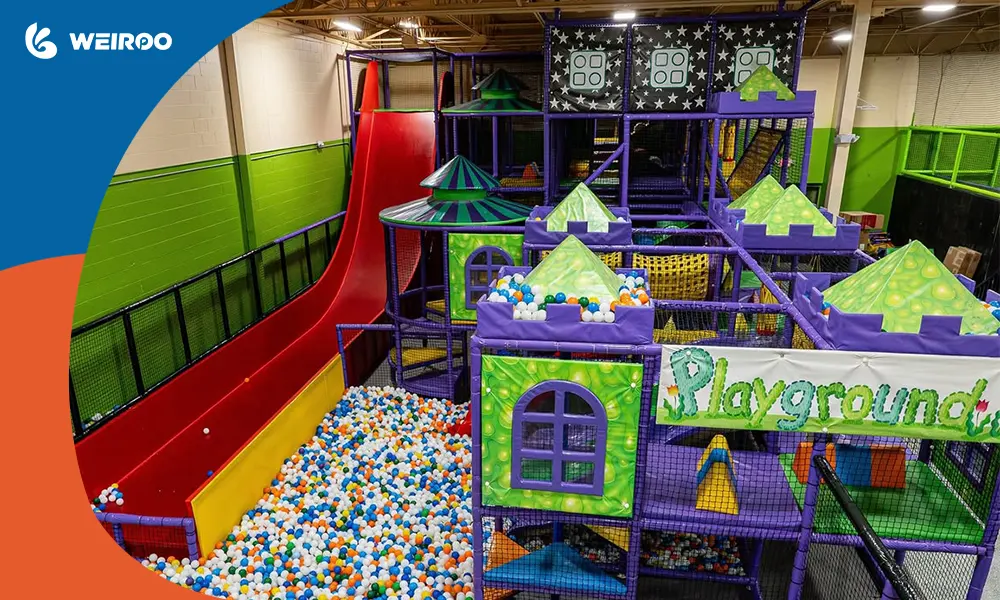
I see rookies make this mistake all the time. They rent a tiny 250 sqm room and try to shove a massive ninja course inside. It becomes a crowded, unsafe mess.
Here is my strict rule:
- Under 300 sqm? Do not target teenagers. Focus 100% on kids under 7. I had a client do exactly this last year. They built a premium, hyper-safe toddler soft play haven. It is highly profitable because they knew their limits.
- Over 500 sqm? Now we have room to breathe. I can build physical barriers to separate the high-speed teenagers on the trampolines from the crawling babies.
Step 2: Don’t Rent a Bad Box
A cheap warehouse is usually cheap for a reason. Bring a tape measure before you sign anything.
- Ceiling Height: If your place is over 500 sqm, I need at least 5 meters (16.4 feet) of clear ceiling height. Anything less, and I can’t build you those exciting vertical drops.
- The Columns: Pillars are my enemy. We can engineer around them, but if you want a premium “Devil Slide” or a massive trampoline court, you need column spacing greater than 8 meters.
Step 3: The Fire Exit Trap
You finish installation. You get ready for opening day. Then the city inspector shuts you down. Why? Blocked fire exits. I see this happen constantly when investors hire suppliers with zero overseas experience. Amateurs just want to sell you more equipment. They will cram every square inch of your floor plan with soft play and steel. They ignore local fire lanes. They block your emergency doors. What is the result? You fail your opening inspection. You are forced to delay your opening, tear down sections of your brand-new park, and rebuild just to create legal walkways. The financial loss is massive. I always map out the mandatory safety corridors first, and then I design the playground around them.
Step 4: The Inexperienced Factory Disaster
Let me share a real case from last year. An investor found a cheap trading company online. That trader used a factory with zero export experience. The factory panicked. They were terrified of making a mistake overseas, so they tried to fully assemble a massive 1,000 sqm park inside their own crowded workshop. It delayed the shipment by over a month.
Don’t fall for this. As an experienced manufacturer, we almost never need to do trial assemblies. Why? Because we have a flawless engineering breakdown system. Before any steel is cut, our team breaks down the 3D design and calculates the exact production dimensions for every single component. Zero errors. Many companies lacking overseas experience don’t even have an engineering team for this process. We manufacture with precision, we pack smart, and we ship on time.
Phase 2: The Math (Budget & Operations)
Step 5: Don’t Spend All Your Cash on Me
Seriously. If you have $200,000, do not spend $180,000 on my equipment. You will fail. Here is how I tell my successful clients to split their money:
- 40% Equipment & Logistics: Buy the gear and pay for the ocean freight.
- 30% Venue Prep: You need money for self-leveling floors, HVAC upgrades, and building a nice cafe.
- 30% Working Capital: Put this in the bank and forget it exists. This pays your rent and staff for the first 6 months while you build your customer base.
Step 6: The Insurance Assassin
In the US, UK, and Australia, compliance is everything. You want to buy cheap, uncertified gear from a random trader? Good luck. When you try to buy Liability Insurance, the insurance companies will ask for your ASTM or TUV certificates. If you don’t have them, they will deny you. Or they will charge you a premium that eats all your profits. I engineer these safety standards into your 3D blueprints from day one.
Step 7: Layout Psychology
Good design isn’t just about looking cool. It’s about saving labor and selling more coffee. I never shove the cafe into a hidden corner. I position the seating area where parents can see as much of the playground as possible. Why? Because moms want to drink a latte and watch their kids without standing up. If parents are relaxed, they stay for 3 hours instead of 1. They buy lunch.
Step 8: Staffing the Park
Labor will bleed you dry if you aren’t careful. On a slow Wednesday morning, you only need 2 or 3 people. One works the desk, one cleans and patrols. But on a packed Saturday afternoon? Bring in 8 people. Never, ever cut corners on your front-desk waiver staff or the safety monitors at the top of the big slides.
Phase 3: Launch & Destroy the Competition
Step 9: Beating the Local Franchise
Got a competitor 3 miles down the road? Good. Let me tell you about a client who faced a massive franchise park.
Franchises are trapped. Their corporate office forces them to charge high ticket prices. My client bought the equipment directly from me, the manufacturer. He saved hundreds of thousands in franchise fees. He had the profit margin to launch with aggressive, promotional pricing. We researched what the franchise lacked, built those specific missing attractions into his park, and he stole their market share in months.
Step 10: Pre-Sell While the Ship is Sailing
My smartest operators do not wait for opening day to make money. While my equipment is sitting in a container on the ocean, they are hustling. They run Facebook ads. They sell discounted “Early Bird” annual passes. They book 3 months of birthday parties. Have cash in your bank account before you even cut the ribbon.
FAQ: The Honest Truth About Starting Your Play Center
Q1: Is it safer to buy a franchise instead of starting my own independent brand? No. Starting an independent brand saves you hundreds of thousands in fees and lets you keep 100% of your money. My Experience: When looking up how to start an indoor playground business, beginners get scared. They buy a franchise for “safety.” Don’t do it. Franchises trap you in rigid pricing and take a cut of your gross sales forever. Partner direct with a real playground company like mine. You get premium custom design, you own the brand, and you keep every dollar you make.
Q2: Can I save money by buying the cheapest equipment I find online? No. You will pay double in replacement parts and denied insurance claims in year one. My Experience: I deal with this objection constantly. A trader quotes you $10k less than me. What they hide is the 1.2mm thin steel pipes and toxic PVC. In month three, your high-traffic slides will crack. You will shut down half your park. Plus, cheap gear has no ASTM certifications. You won’t be able to buy liability insurance. Don’t risk a $200k business to save a few bucks on the steel.
Q3: Can I install the playground myself to save on labor costs? Only if your room is under 100 sqm. For commercial parks, you need a pro to pass local inspections. My Experience: Commercial indoor playground equipment requires structural engineering and heavy tensioning for safety nets. It’s not a bookshelf. If a local handyman uses the wrong bolts, the Fire Marshal will fail your inspection. You won’t open. I use a “Hybrid Model” with my clients: I send one of my lead engineers to supervise, and you hire local laborers for the heavy lifting. It saves you money and guarantees you pass inspection.
Let’s Look at Your Building
You don’t have to guess anymore. Do you have a building in mind? Get the floor plan. Send me the CAD file. Let’s look at the math, avoid the pillars, and build a park that actually makes money.
Contact me today, and let’s get to work.